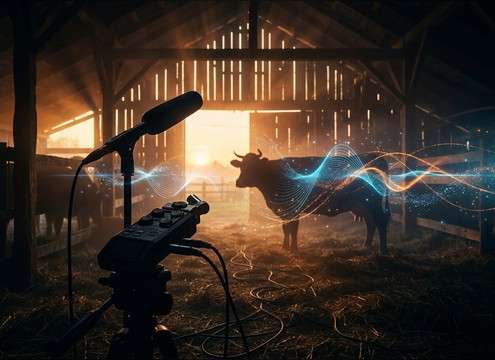









A moo can read as cute, annoying, lonely, or huge depending on pitch, timing, and space. Use these quick checks to choose a ready clip or write a better prompt for a custom variation that lands on the cut and sits in your mix.
Match emotion and pitch contour
Editors usually need one of three reads: neutral farm realism, attention-seeking calf calls, or an exaggerated comedic moo. Ask for pitch movement (flat vs bending) and texture (smooth vs raspy) so the performance feels intentional rather than generic.
- Neutral: steady pitch, smooth attack, natural tail
- Calf: higher pitch, shorter decay, lighter low end
- Angry: harder transient, raspier texture, stronger low-mid energy
Choose perspective: close, medium, distant
Perspective is what makes a moo believable in a shot. Close moos feel dry and present, while distant moos lose highs and carry longer tails. If your scene changes framing, switch perspective instead of boosting volume.
- Close: minimal room tone, focused center image
- Distant: air loss, softer transient, longer decay
- Barn interior: audible reflections and a clearer tail
Control tail and room tone for cleaner edits
The tail is what often clashes with narration or music. A tight tail is easier to cut, while a longer tail sells space. Pick the tail based on how quickly your next line or shot starts, and avoid clips with noisy floors if you need repeated placements.
- Short tail for punchlines and quick cuts
- Long tail for wide exterior establishing shots
- Lower room tone when the clip must sit under dialogue
Make it loop-friendly when needed
If you are building a pasture bed, look for consistent noise floor and spacing. A loopable ambience should avoid abrupt endings and leave gaps so it does not mask footsteps, cloth, or UI elements.
- Ask for smooth fade-ready ends and stable ambience
- Space moos to leave room for other foley
- Avoid constant loud moos that dominate the soundscape