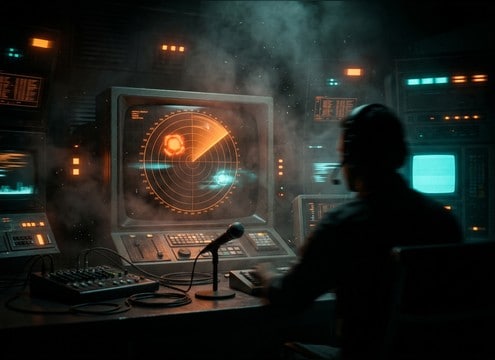
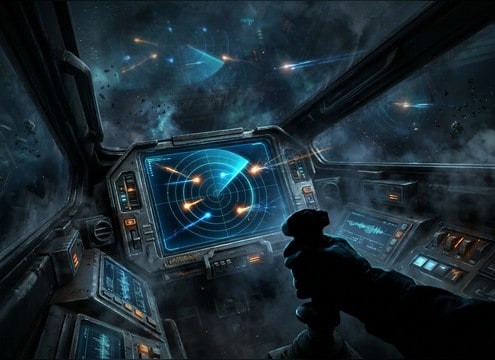
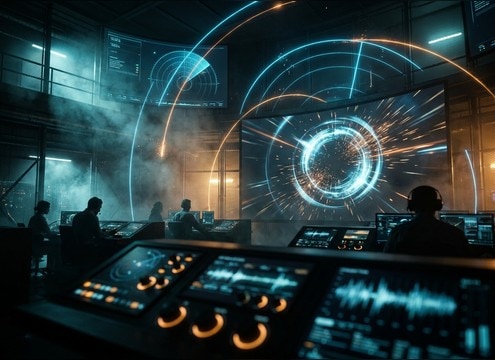
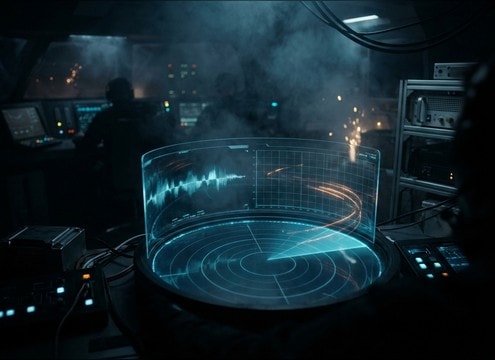
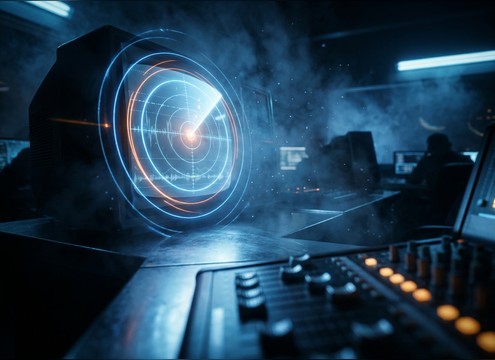


Radar cues are all about timing and clarity: a readable transient for the blip, a believable sweep cadence, and the right amount of tail so it does not smear over UI motion. Use the library when you need something instantly, then switch to AI prompts when you must match a specific screen sweep speed, alert tier, or a retro analog scope vibe.
Match the on-screen sweep timing
A radar sound often feels wrong when the audio cadence does not match the visual sweep. Describe the sweep rate, whether contacts appear on every pass, and if the cue should be a single hit or a repeating cycle.
- Prompt for speed: slow sweep, medium sweep, rapid sweep pulse
- State rhythm: one ping per rotation, intermittent blips, steady cycle
- Choose length: 5s for hits, 10s for loops, 20s for search beds
Pick the right tone: analog vs digital
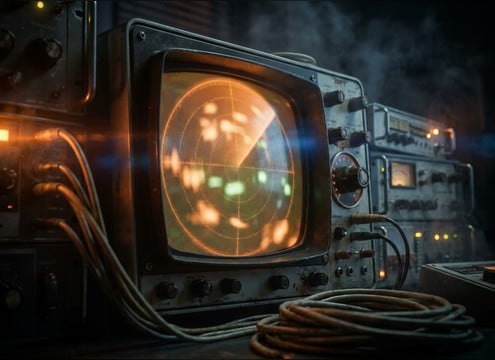
Analog-style radar reads warmer and softer, often with a faint hum. Digital UI radar reads cleaner and brighter with sharper transients. Naming the era and texture in your prompt helps the generator land in the right place.
- Analog cues: warm tone, softened highs, faint electrical hum
- Digital cues: clean sine-like blips, crisp attack, low noise floor
- Retro UI flavor: slight grit, bit-style texture, controlled brightness
Control transient and tail for clarity
For UI moments, prioritize a defined attack so the cue reads instantly. For cinematic control rooms, a longer decay and subtle reflections can sell space, but too much tail will blur repeated sweeps.
- UI hits: sharp transient, very short tail, centered placement
- Roomy scenes: medium tail, light reflections, stable noise floor
- Loop safety: avoid long ringing tones that overlap the next sweep
Avoid common radar SFX pitfalls
Radar cues can become fatiguing or mask dialogue if they are too bright, too loud, or too busy. Keep the sound simple and consistent, then add intensity only when story stakes rise.
- Avoid harsh highs that turn pings into piercing beeps
- Avoid random volume jumps that break loop consistency
- Avoid over-layered chatter that competes with comms and alarms