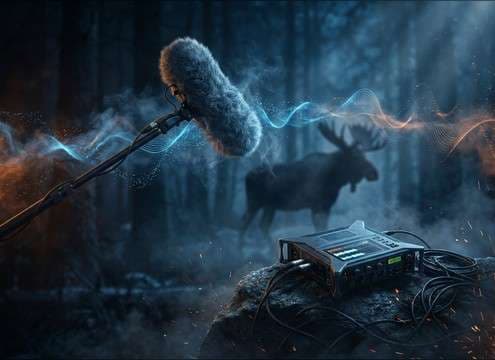



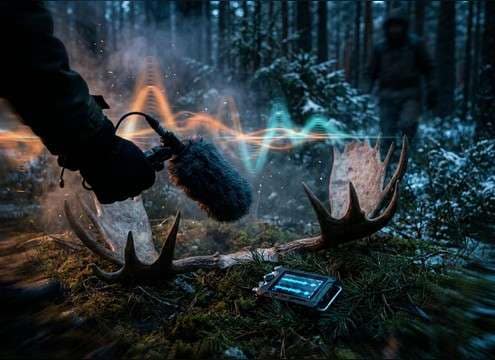



Moose audio sells scale and distance. When you pick a clip or write a prompt, focus on the call type (bellow, grunt, snort), the perspective (close, medium, distant), and whether you need clean isolation or a little forest air. Small wording changes like short tail vs longer decay can make a bellow feel like it happened beside the camera or across a lake.
Pick the right vocal type
Bull bellows read powerful and attention-grabbing, while grunts and breath huffs feel intimate. Snorts work best as sudden reactions or threat cues.
- Use bellow for dominance or rut season moments
- Use grunt for low-key presence or off-screen movement
- Use snort for startled beats with a sharp transient
Control distance and tail
Distance is more than volume. A close call has clearer texture and less room tone, while distant calls lose highs and carry a longer, softer tail.
- Prompt close perspective for crisp detail and tight decay
- Prompt distant perspective for rolled-off highs and more air
- Ask for short tail when you need the call to end cleanly under dialogue
Decide on background texture
Some scenes need isolation, others need believable outdoor air. Avoid heavy wind beds that fight your ambience layers or make loops obvious.
- Request clean noise floor for educational narration and VO
- Allow light forest air when the shot is wide and quiet
- Avoid strong birds or gusts if you plan to layer your own ambience
Avoid common moose SFX pitfalls
Moose calls can easily sound too aggressive, too long, or too reverberant. Keep timing natural and match the animal size without turning it into a monster roar.
- Avoid excessive reverb that feels like an indoor recording
- Avoid exaggerated low-end rumble that reads as creature SFX
- Avoid repetitive identical calls; use variations for realism