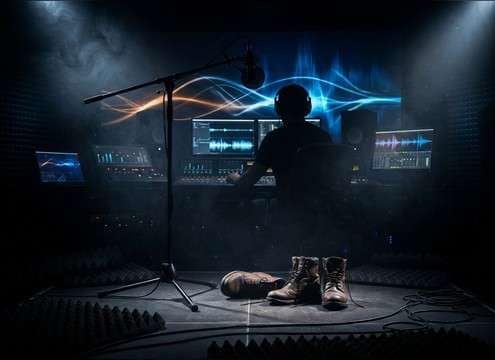

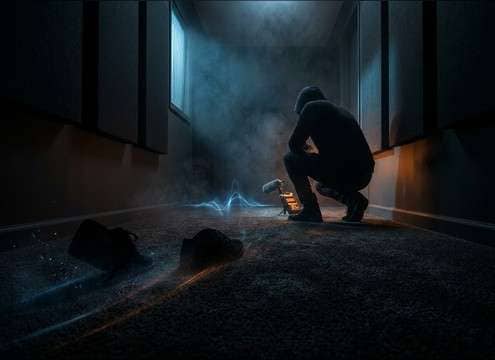

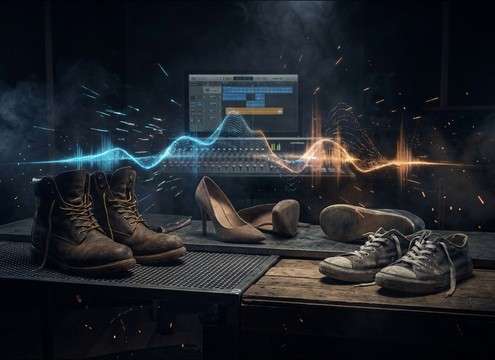




Footsteps feel "wrong" when the surface, pacing, or space doesn't match the picture. Use the library to grab an instant fit, or generate custom takes by prompting for what the camera would hear: footwear, material, stride pattern, and how reflective the location is. The tips below help you get steps that sync faster and sit naturally under dialogue and music.
Match the surface texture first
Viewers forgive slightly different shoes, but they notice the wrong ground. Pick the material that produces the right transient and debris: tile slap, wood knock, gravel crunch, or snow crumble.
- Say the surface explicitly: "ceramic tile," "old wood boards," "loose gravel," "dry snow"
- Add texture words: "gritty," "dusty," "wet," "crunchy," "damped"
- Avoid mixed materials in one prompt unless the shot changes ground
Set footwear, weight, and stride
Footwear changes the attack and low-end. Heels give a sharp click, boots add thump, sneakers add soft rubber and occasional squeak. Stride length and intent set the rhythm your edit needs.
- Use cues like "light steps," "heavy steps," "careful tiptoe," or "urgent run"
- Specify heel-toe vs flat: "distinct heel attack," "soft sole impact"
- If syncing is hard, request "steady cadence" or "stop-start pauses"
Choose perspective: close Foley vs distant pass
Camera distance and location shape the tail. Close steps should be tight with minimal ambience; distant steps should lose high-end and gain room tone and reflections.
- Prompt distance: "close mic," "mid distance," or "distant down the hall"
- Name the space: "narrow hallway," "small room," "open outdoors"
- For distant takes, ask for "longer decay tail" and "subtle stereo width"
Edit quickly: timing, gaps, and consistency
Even a perfect step sounds fake if it's late, too loud, or inconsistent across cuts. Pick takes with predictable transients, then nudge and trim to match foot contact and pace changes.
- Align the strongest transient to heel strike or sole contact on frame
- Keep loudness consistent across angles; swap to softer variants for wider shots
- Avoid overlong tails that smear into dialogue—choose drier steps when needed