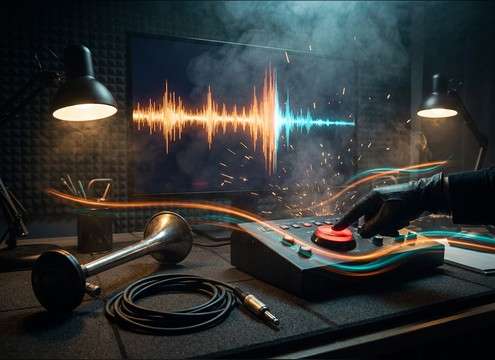




Annoying SFX are supposed to be uncomfortable, but the best ones still obey your timing and leave space for dialogue. Use the library when you need a proven buzzer, beep, whine, or alarm. Use the AI generator when you need the same vibe with different pitch, shorter decay, or a cleaner transient for a tight cut. Here is a practical way to choose and prompt them so they land as a joke or a warning, not just noise.
Choose the right annoyance type
Match the sound to the on-screen action. Mechanical punishments (buzzer, drill) feel stricter, while digital beeps feel like UI feedback. Horns and squeaks read as comedy punctuation.
- Buzzer: fast attack, dense mid buzz, minimal tail for instant failure cues
- Whine: sustained high tone with slight wobble for discomfort and tension
- Beep stack: short tones with clean decay for app and device feedback
Prompt for intensity, not just loudness
If you only ask for loud, you often get harsh peaks that are harder to place. Instead, describe the texture, frequency focus, and envelope so the sound cuts through without overwhelming.
- Use words like piercing, nasal, buzzy, bitcrushed, or metallic to control texture
- Call out envelope: sharp transient, tight decay, or clipped cutoff tail
- Specify space: dry close, small room reflection, or no ambience
Fit the cut with duration and rhythm
Annoying sounds work best when they stop exactly when you need them to. Pick 5 seconds for stabs, 10 seconds for a short penalty cue, and 20 seconds for a busy montage bed.
- For jump cuts, request a single stab with a very short tail
- For repeated gags, ask for loop-friendly timing and consistent tempo
- For montages, request shifting patterns but controlled stereo width
Avoid the common mistakes
Creators often choose the most extreme version, then fight it in the edit. A slightly cleaner transient and shorter decay usually reads more intentional and still feels annoying.
- Avoid long reverb tails that smear into speech and next-shot audio
- Avoid excessive low-end rumble that muddies music and crowd reactions
- Avoid random silence gaps unless you want a comedic stop-start pattern