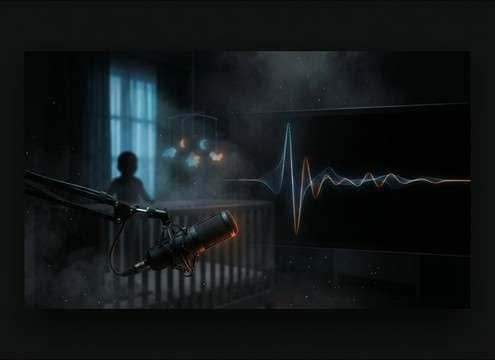



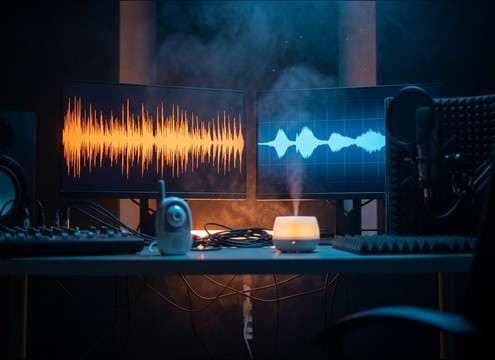





Newborn cries read differently depending on camera distance, room acoustics, and how much they compete with speech. Use the library to grab a quick fit, then refine with prompts that describe intensity, perspective, and tail length so the cry supports the story instead of dominating the mix.
Start with intensity and rhythm
Decide whether you need a soft fuss, a rising wail, or intermittent bursts. In most edits, rhythm matters more than loudness—pick a pattern that hits the reaction beat, then adjust level in your timeline.
- Use "fussing" for low-stakes moments and calmer pacing
- Use "urgent wail" when you need an immediate emotional spike
- Ask for "two bursts with a pause" to match quick cutaways
Match the perspective to the camera
A close shot wants crisp transients and detail; a hallway or next-room shot wants softened highs and more room tone. If the cry feels "too present," it usually needs more distance, not just a volume drop.
- Close-mic: clearer attack, less room, tighter stereo
- Across-room: rolled-off highs, audible reflections, longer decay
- Through device: "baby monitor speaker" for band-limited realism
Control tail and masking in the mix
Long decay can smear into dialogue and music. For spoken scenes, pick shorter tails or regenerate a version with reduced reflections, then shape it with fades so phrases end cleanly on cuts.
- Short tail for dialogue-heavy scenes and rapid intercuts
- Medium tail for natural interior realism without overwhelm
- Avoid clipped endings; choose a take with a natural release
Write prompts that prevent "adult-sounding" results
If a take sounds too old or too harsh, refine the prompt with age cues and texture notes. Newborn cries are smaller, breathier, and less "projected" than toddler screams.
- Add "newborn, very small, breathy" to keep the timbre appropriate
- Request "no screaming, no shouting, no distortion" for safer peaks
- Ask for "softened attack" to reduce sharp transients