






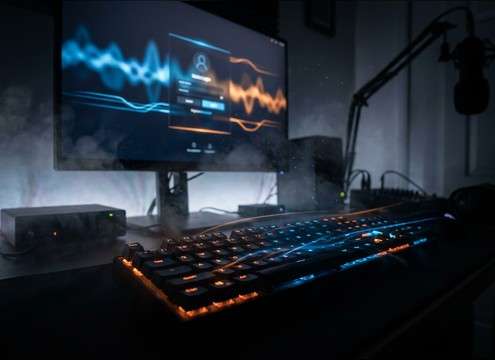


Keyboard SFX can either sell the action or turn into distracting tick noise. Use the library items when you need instant results, or write prompts that specify keyboard type, cadence, perspective, and how much tail you want. The goal is simple: clear attacks for visibility, controlled decay for mix, and a pace that matches what the viewer sees.
Choose the keyboard type and tone
Start by naming the physical feel you want. Mechanical boards tend to have brighter clicks and a thicker clack, while laptops read as softer taps with less low-end. Adding one tonal adjective helps the generator avoid harshness or dullness.
- Use terms like clicky, tactile, or muted to steer brightness
- Call out plastic clack vs soft tap to control texture
- Ask for low background noise if it must sit under voice
Set pace and intention
Typing is storytelling: a few deliberate taps feels like entering a password, while a dense run feels like coding or frantic searching. Specify pace and spacing so the rhythm matches the on-screen hands or cursor movement.
- Specify slow, steady, rapid burst, or frantic mashing
- Mention occasional enter key or spacebar accents when needed
- Ask for consistent dynamics if you plan to loop it
Control distance and tail
Perspective changes everything. Close-mic typing emphasizes detail and stereo width, while distant typing smooths transients and adds room tone. Tell the generator how present the sound should be and how long the decay can linger.
- Close mic for UI and screen recordings where clarity matters
- Distant room perspective for dialogue scenes and wide shots
- Request short tight tail to avoid clutter between lines
Avoid common keyboard SFX mistakes
The biggest issues are brittle highs, uneven spikes, and backgrounds that draw attention. A small tweak in the prompt usually fixes it faster than post-processing.
- Avoid overly sharp highs if it will stack with sibilant dialogue
- Avoid random loud hits when you need predictable rhythm
- Avoid heavy room echo unless the scene clearly shows the space