

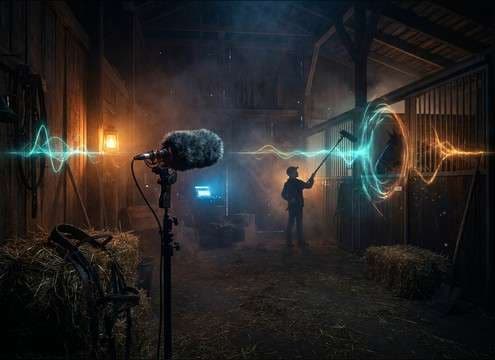
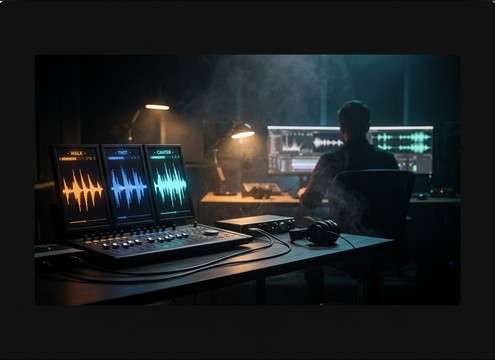






Horse audio sells the scene when the gait rhythm, surface texture, and perceived distance match what the viewer sees. Use prompts that name the action (walk/trot/gallop), the ground material, and whether the horse is close, approaching, or passing. For vocal sounds, choose the intention (neigh, whinny, whicker, snort) and keep the ambience consistent with your location.
Choose the right gait (rhythm first)
Most "wrong horse" moments come from mismatched cadence. Walk is spaced and uneven, trot is symmetrical and brisk, and gallop is heavier with a driving pattern. If your cut is fast, request tighter attacks; if it's scenic, allow more natural decay.
- Use words like "slow walk," "steady trot," or "full-speed gallop" to lock the tempo
- Ask for "punchy hoof transients" when you need clarity under music
- Request "softer impacts" for calm riding or close dialogue
Call out the surface and debris
Surface changes the entire timbre: dirt gives low thuds, straw adds soft rustle, wood planks add hollow knock, and cobblestone adds bright clicks. Mention whether you want clean impacts or extra texture like grit, straw movement, or small stones.
- Add the ground: "packed dirt," "wet mud," "straw bedding," or "cobblestone"
- Specify texture: "clean steps" vs "gritty debris and scuffs"
- If it's indoors, mention "stable creaks" lightly to avoid clutter
Set distance, movement, and tail
A close take should feel immediate with minimal room, while distant takes need more air and less high-end. For motion, "approach then pass" creates a natural perspective shift that helps sell camera moves and wide-to-close edits.
- Use perspective words: "close-up," "mid distance," "far across a field"
- For camera motion, prompt "approaching, then passing by"
- Control space with "short tail" (tight) or "natural outdoor tail" (open)
Pick the correct vocal type (and avoid cartoon reads)
Neighs and whinnies are not interchangeable: a strong neigh reads urgent and front-facing, a whicker is small and friendly, and snorts are quick breaths that layer well with hoof movement. Keep prompts grounded—overly "funny" language often pushes results toward caricature.
- Ask for "neigh" (loud), "whinny" (calling), "whicker" (soft greeting), or "snort" (short breath)
- Include "natural breath" and "no exaggerated cartoon tone" when needed
- If mixing with hooves, request "minimal background noise" for cleaner layering