

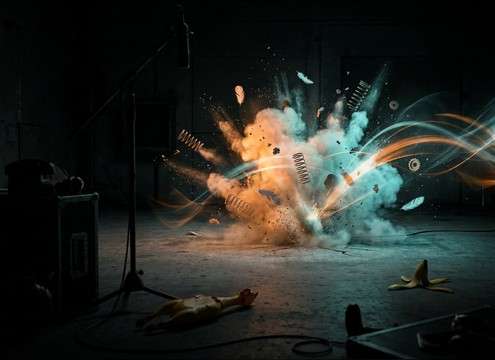

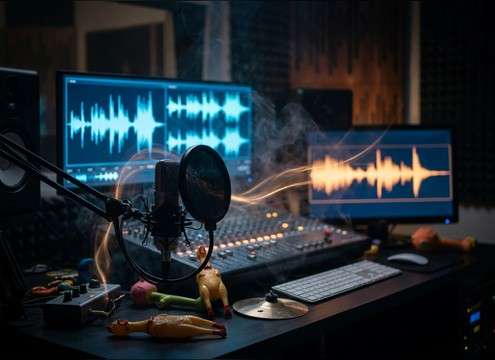




"Goofy-ahh" usually means exaggerated, cartoon-logic audio with obvious pitch movement and a clean, fast decay. The trick is choosing the right gag type (boing vs bonk vs splat), then controlling transient sharpness and tail length so the sound reads instantly without covering dialogue or the next cut. Use the tips below to write better prompts and pick the best download from multiple variations.
Choose the gag category first
Start by naming the action like the editor would: impact, slip, spin, or fail. A clear category helps you avoid "random funny noise" results and keeps the transient aligned to the moment on screen.
- Impact moments: "bonk", "thud-pop", "wood knock" (fast attack, tiny tail)
- Movement moments: "spin whoosh", "skid squeak" (sweeping motion, clean stop)
- Punchline moments: "wah-wah fail", "short stinger" (recognizable tone, controlled decay)
Control pitch bend and exaggeration
Most goofy effects feel funny because the pitch moves in an obvious way. Specify whether you want a downslide, upchirp, or wobble, and keep the range believable so it doesn't become harsh.
- For boings: ask for an "elastic pitch bend down" with a springy rebound
- For fails: use "detuned wobble tail" or "warbly dip" instead of long musical notes
- If it sounds too sharp: request "softer attack" or "less top-end bite"
Make the tail fit your edit
The best meme SFX end quickly. Long reverb or noisy ambience makes the joke feel late and masks the next line. Prompt for tight decay and minimal room tone unless you want a deliberate slapback.
- Ask for "short tail" or "tight decay" to keep the punchline crisp
- Use "tiny slapback" when you want a classic cartoon-stage feel without a long reverb wash
- If you're stacking sounds: pick the take with the cleanest noise floor and least low-end
Avoid common 'meme SFX' mistakes
A goofy sound should be clear, not loud or distorted. If your clip is fighting music or dialogue, reduce complexity: fewer layers, less ambience, and shorter decay.
- Avoid overly long sequences when you only need a single hit on one frame
- Avoid heavy rumble and wide stereo if the sound must translate on phones
- Avoid clipping: choose versions with clean transients, then add gain in your editor if needed