


Foghorns are all about perspective and timing. The same horn can feel huge and threatening up close, or calm and atmospheric when heard through fog. Use the tips below to choose a ready-made clip or write a prompt that matches your shot, especially the cadence between calls, the amount of low-end weight, and how long the decay should hang in the air after the blast.
Start with the camera distance
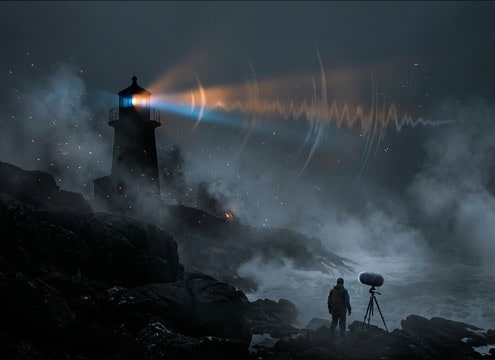
Distance changes the transient and brightness more than people expect. Close horns read with a firmer attack and more mid detail, while distant horns feel smoother with less top end and a wider, hazier tail. If your scene already has loud surf or rain, a distant horn with a softer attack will mask better and feel integrated.
- Close: strong attack, clearer harmonics, less haze
- Distant: softened transient, reduced highs, longer perceived decay
- Through fog: ask for filtered tone and diffuse stereo haze
Define the horn type and cadence
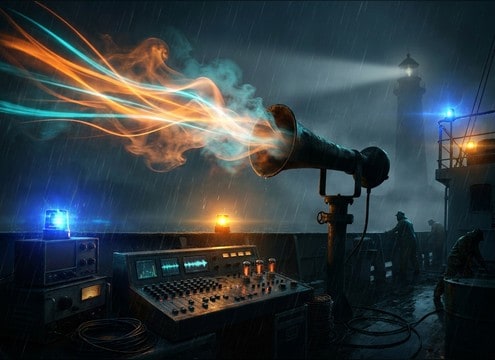
Editors often need the horn to tell the audience something: a single punctuation hit, a procedural pattern, or a slow periodic call for mood. In prompts, describe the number of blasts, the pause length, and whether you want a steady pitch or slight wobble. This avoids getting a cool sound that does not cut with your action.
- Single blast: best for a hard cut or a ship reveal
- Double call: reads like communication, not just ambience
- Repeating pattern: specify spacing so it feels intentional
Match the space with tail and reflections
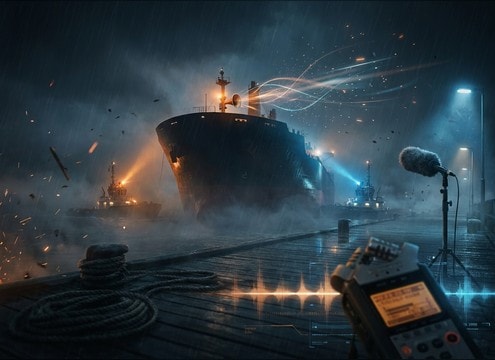
A harbor with warehouses and cliffs throws reflections; open sea feels cleaner with less slapback. If the horn feels pasted on, it is usually the tail behavior, not the horn itself. Use wording like dock reflections, pier slapback, or open water with minimal reflections to steer the result.
- Dockside: add slapback and longer reverb tail
- Open water: cleaner decay, fewer early reflections
- Narrow channel: tighter reflections that repeat quickly
Avoid common foghorn selection mistakes
The biggest issues are horns that are too bright, too wide, or too loud for the rest of the scene. If you are layering under narration, ask for controlled low-end and reduced harshness. For ambience beds, avoid overly dramatic attacks that pull focus every time the horn hits.
- If it sounds fake: reduce brightness and soften the transient
- If it swallows dialogue: request less low-end and shorter decay
- If the bed feels jumpy: choose smoother attacks and longer pauses