


Fire can read as cozy, dangerous, or purely functional depending on the transient detail and the tail. When previewing downloads or writing a prompt for a fire sound effect generator, decide what’s burning, how close the listener is, and whether you need a steady loop or a single flare. Use the tips below to avoid brittle highs, over-long reverb, or “too-big” flames for a small source.
Match the source: ember, flame, or blaze
The object and fuel define the texture. Paper and dry leaves produce tight, crispy micro-crackles; wood gives chunkier pops and occasional shifts; a gas flame is smoother and more consistent.
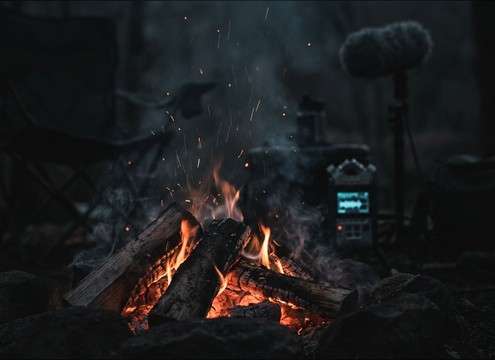
- For a campfire bed, ask for “wood crackle with occasional pops” rather than a constant roar
- For a stove or torch, emphasize “steady hiss” and “low bass” to keep it realistic
- For a destructive scene, include “heavier low-mid roar” and “intermittent collapse ticks”
Set perspective and space in the wording
Distance changes what cuts through. Close fire has crisp attacks and more detail; distant fire is softer and carried by ambience. Indoor flames often need audible reflections, while outdoor fire should feel drier with light wind wash.
- Use “close-mic” for sharper transients; use “distant” for softened highs and more air
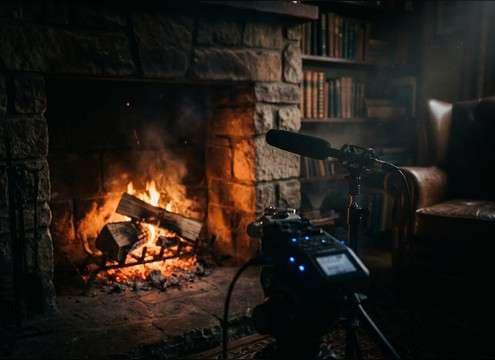
- Add “small room reflections” for fireplaces; avoid big hall reverb unless the scene shows it
- If dialogue is present, request “controlled crackle” to reduce masking in the 2–6 kHz range
Choose the right motion: steady bed vs flare-up
Not all fire is continuous. A flare-up needs a fast whoosh attack and quick decay; an ambience bed should keep consistent energy so edits don’t pump or jump in level.
- For ignition moments, include “fast whoosh attack” and “short tail”
- For ambience, include “loopable” and “consistent crackle density”
- If you need a calmer vibe, ask for “gentle flicker” and “fewer sharp pops”
Avoid common problems when selecting clips
Fire is easy to overdo. The wrong clip can sound like static, steam, or aggressive white noise. Check the attack, tail, and stereo width against your scene’s camera distance and background.
- Skip clips that are overly hissy or harsh; they can fatigue listeners quickly
- Avoid long, obvious reverb tails on outdoor fire unless the environment supports it
- Don’t use a huge blaze bed for a single candle or small torch—scale matters