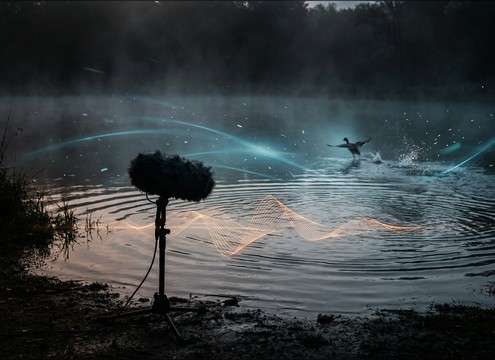
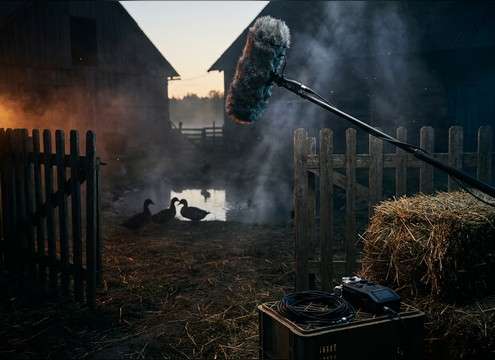
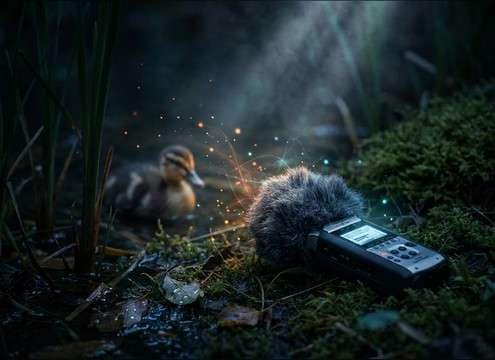



Duck audio reads as "real" when the quack shape, distance, and environment agree with what the viewer sees. Use the library items for fast drop-ins, then refine with prompts to control transient bite, tail length, and how much water/air texture sits under the call.
Pick the right quack style
Not every duck call fits every moment. A single close quack works for a reaction cut, while a small flock pattern sells wider shots. Describe rhythm and intensity so the generator doesn't over-fill the space.
- Use "single quack" for sync hits; "short burst" for agitation
- Ask for "soft, friendly tone" to avoid harsh midrange spikes
- Request "natural spacing" when you need believable chatter
Match distance and mic perspective
Distance changes everything: close quacks have clear transients and less ambience; distant quacks lose high-end and gain reflections. Prompting perspective helps your clip sit in the shot without sounding pasted on.
- Close: "close-mic, dry, minimal room tone, short decay"
- Medium: "park pond, subtle reflections, moderate tail"
- Far: "across the water, muffled highs, soft environmental smear"
Add water and movement when needed
On-screen motion often needs more than vocals. Wing flaps, paddling, and splashes provide the foley cues that make ducks feel physical—especially in takeoff/landing or group activity moments.
- For paddling: "light water ripples, small bubbles, close perspective"
- For flaps: "rhythmic wing thumps with splash transients"
- For landing: "short splash impact, quick drip tail, no huge reverb"
Avoid common "fake duck" tells
Overly clean or overly cartoonish quacks break realism. Keep noise floors controlled but not sterile, and avoid tails that sound like indoor reverb unless the scene is actually enclosed.
- Avoid "big hall reverb" unless you're in an indoor petting zoo scene
- Don't over-loop short quacks; use a longer bed for ambience
- If it feels synthetic, prompt "natural texture, subtle breath, gentle decay"