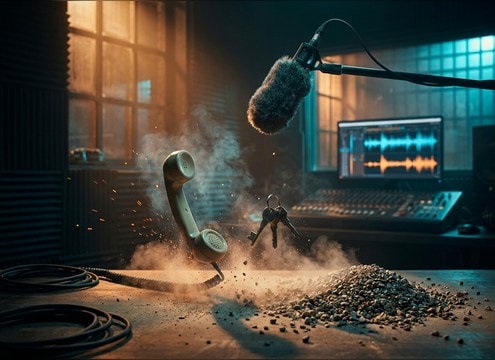







A convincing drop is mostly about three choices: what fell (material and weight), what it hit (surface hardness), and how the space reacts (room tone and decay). Use the library to find a close match fast, then refine with prompts to control bounce count, brightness, and tail length so the impact lands exactly on the frame.
Start with the object and its weight
Heavier items read as lower and slower, with thicker low-mids and less ping. Small metal items have sharper transients and more ring. When prompting, name the object and add one weight cue so the attack and body feel right.
- Use weight words: light, heavy, chunky, dense
- Call out material: plastic, metal, glass, ceramic, wood
- Specify if it is hollow or solid to shape resonance
Match the surface hardness and bounce
Surface changes the amount of click, snap, and bounce. Tile and concrete produce brighter transients; carpet and fabric soften the attack and shorten the tail. If your shot shows multiple bounces, prompt for a small scatter or a couple of rebounds.
- Hard surfaces: tile, concrete, stone, metal sheet
- Soft surfaces: carpet, couch, backpack, clothing
- Add bounce detail: single hit, two bounces, scattered pieces
Control room tone, decay, and stereo width
A drop recorded close will feel dry and direct, while a hallway or warehouse adds reflections and longer decay. Choose a tail that does not step on dialogue. For wider scenes, ask for wider stereo or more reflections; for tight edits, keep it centered and short.
- Close-mic: minimal room tone, tight decay
- Large space: longer reflections, softer high end at distance
- Keep tails short for fast cuts and UI timing
Common mistakes to avoid
Drop sounds often fail because they are too loud, too bright, or have a tail that keeps ringing into the next shot. Avoid unnatural distortion and overly busy debris unless the object truly scatters. When in doubt, choose a cleaner transient and shorten the tail with a tighter prompt.
- Avoid excessive ring on non-metal objects
- Do not let tails overlap dialogue or the next action
- Skip clipped or distorted impacts unless it is intentional