


A DJ airhorn works when it is intentional: the transient should hit when the cut hits, the tone should match your genre, and the decay should not smear the next beat or line. Use the library previews to pick a ready clip, or write prompts that specify horn style, loudness, stereo width, and how long the tail should ring out.
Pick the horn style that fits the moment
Airhorns are not one sound. A classic sampled blast reads like a DJ button; a stadium horn feels larger with more body; a distorted rave horn adds aggression. Decide whether you need a single punch, a short chirp, or a sustained tone before you download or generate.
- For punchlines, choose a short chirp with a fast transient and minimal decay
- For drops, choose a loud classic blast with a tight compressed tail
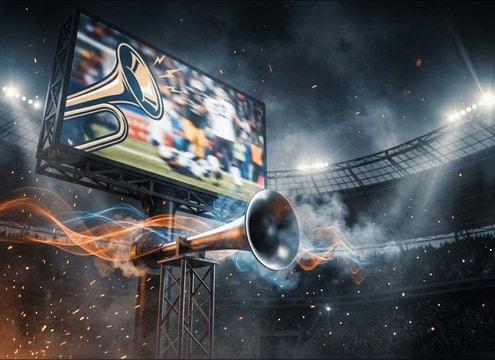
- For venue energy, choose a stadium or stage horn with audible reflections
Control attack and decay so it does not mask
The best airhorn is mix-aware. Too slow an attack feels late; too long a tail covers the next bar. When prompting, call out a sharp transient, the tail length, and whether you want clean or saturated edges.
- Ask for a sharp transient if the horn must cut through a busy beat
- Ask for a short tail if there is dialogue or a vocal coming right after
- Ask for mild saturation if you want thickness without harsh clipping
Match space and stereo width to your scene
A dry mono horn feels like a soundboard button. A wide stereo horn feels larger but can pull attention from the center. If your clip implies a real space, add room tone and light reflections so it belongs in the shot.
- Use mostly mono for podcasts, voice tags, and on-screen button moments
- Use wider stereo for music drops, highlight reels, and bigger transitions
- Add room reflections when the visual shows a stage, arena, or indoor venue
Avoid the common airhorn mistakes
Most problems come from extremes: harsh resonant highs, clipped distortion that splatters, or a tail that never ends. Preview with your music or voice under it, then regenerate with a more specific prompt if needed.
- Avoid overly bright horns that pierce on phone speakers
- Avoid constant clipping if you need a clean, professional stinger
- Avoid long reverb tails when the next beat needs space