
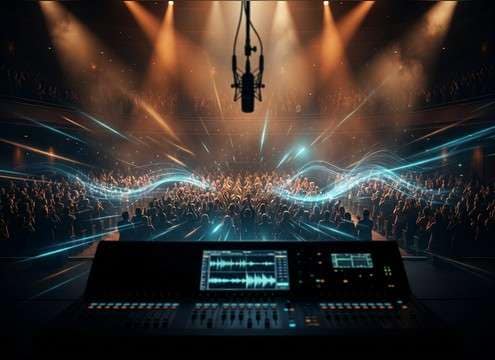
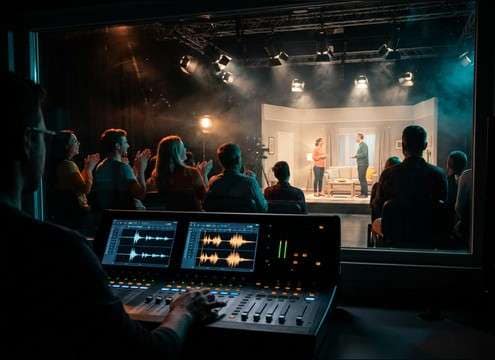
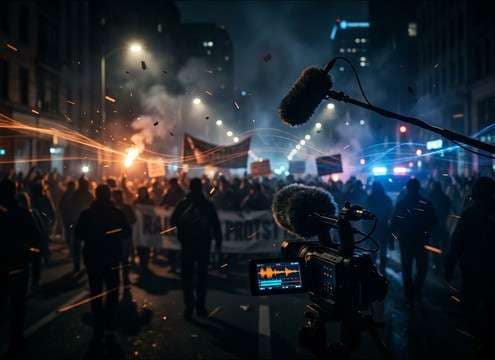
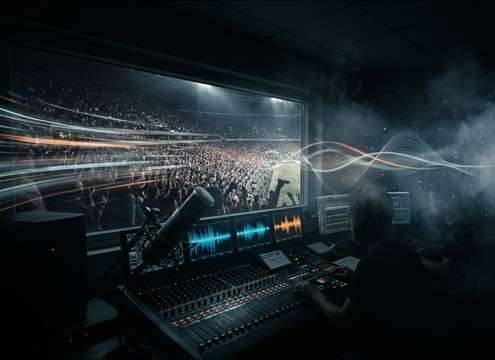
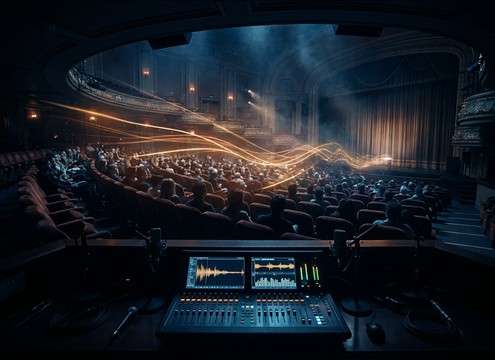



Crowds can read as "fake" fast if the energy level, distance, and tail don't match the camera and the space. Use the tips below to pick a clip from the library or write a prompt that produces the right density and motion—without harsh peaks that fight dialogue or music.
Match the crowd energy to the action
Start by deciding whether you need a steady bed (murmur/ambience) or a punctuated event (cheer, clap burst, gasp). Event reactions usually need a defined attack; ambience needs even motion and fewer spikes.
- Use "murmur" or "low crowd bed" for continuous backgrounds
- Use "big cheer" or "standing ovation" for moment-driven cuts
- Add "no whistles, no vuvuzelas" if you want a cleaner tone
Set distance, space, and reflections
Perspective is the difference between "on the field" and "from the hallway." Close crowds have more transient detail; distant crowds smear and soften. Indoor spaces add early reflections and audible room tone.
- Try "close mic, crisp claps, short room" for tight shots
- Try "mid-distance, hall reflections" for theater and awards
- Try "distant wash, softened highs" for exterior wide shots
Choose tails that cut cleanly
A long decay can feel cinematic, but it can also step on the next line of dialogue. For applause and cheers, decide if you need a fast stop, a natural fade, or a sustained bed you can crossfade.
- Ask for "short decay" when you need a quick button ending
- Ask for "natural long tail" when the shot holds on the crowd
- For looping beds, request "loop-friendly start and end"
Avoid common crowd SFX giveaways
Crowd recordings often fail because they're too bright, too repetitive, or have a single standout voice. If your mix already has narration or music, you'll usually want smoother mids and controlled peaks.
- Avoid "individual shouts clearly audible" unless it's story-driven
- Avoid harsh high-end if it makes sibilance in the mix
- Avoid overly constant maximum loudness; add "natural variation"