

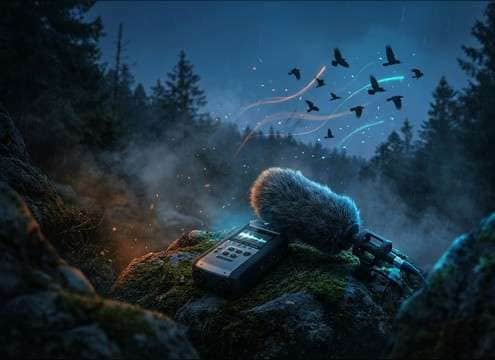
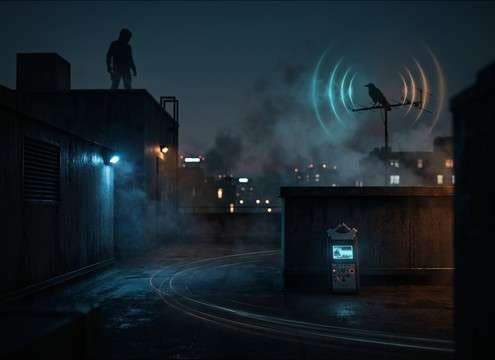


Crow audio reads as fake when the timing, distance, or tone does not match the shot. Use these quick checks to pick the right clip from the library, or write prompts that reliably produce the perspective and texture you need.
Match the perspective to the camera
A close crow needs a crisp transient and present midrange, while a distant crow should feel softer with more air and a longer perceived tail. If your shot is wide, avoid overly dry close-up caws.
- Close: sharp attack, less room tone, shorter decay
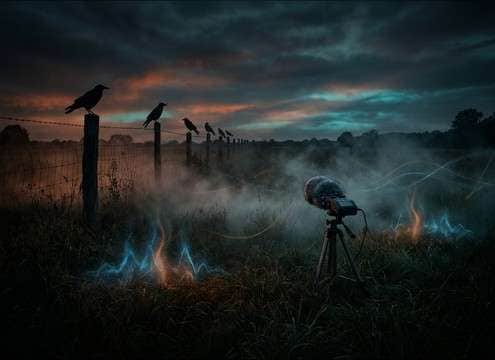
- Distant: softened transient, more air, subtle reflections
- Moving: add slight Doppler feel for flybys
Pick the right call behavior
Crow moments usually fall into single punctuation, repeated phrases, or flock bursts. The right behavior sells story beats: a single caw for a cut, repeated calls for tension building, or a flock for sudden chaos.
- Single caw: clean hit for edits and reactions
- Phrase: 2 to 4 calls with natural gaps
- Flock burst: layered calls with wider stereo and more masking
Control tail, texture, and brightness
Harsh, bright caws cut through music but can sound too aggressive in calm scenes. Muffled calls work behind foliage or walls and help keep dialogue intelligible. Tune the tail to the environment you imply on screen.
- Bright and gritty: stronger bite, better for ominous cues
- Muffled: reduced highs for behind-trees or offscreen placement
- Roomy tail: longer decay for open spaces or reflective locations
Avoid common crow SFX mistakes
Overusing the same identical caw quickly breaks realism. Avoid placing a close call in a wide exterior, and do not let a flock burst cover key production audio. Small prompt changes can fix most issues.
- Do not repeat the exact same call back-to-back
- Do not use a dry close caw for a distant wide shot
- Do not over-layer calls until they mask dialogue or cues