


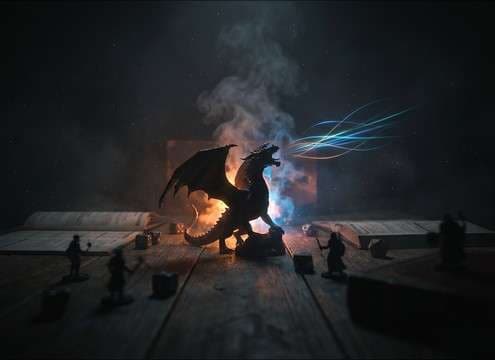





A dragon roar sells size and intent more than volume. When browsing clips or writing a prompt, focus on three things editors notice immediately: the attack (how fast it hits), the body (pitch and texture), and the tail (how long the space hangs around). Use the tips below to get a roar that matches your camera distance, environment, and moment in the scene.
Match intensity to the on-screen action
A roar for a reveal should have a strong transient and clear body, while a warning growl can be slower and more controlled. If your cut is tight, prefer shorter decay so the next sound cue stays readable.
- For a jump cut: request a fast attack and a tight cutoff tail
- For a hold on a wide shot: request a longer decay with stable low-end
- For a wounded creature: request uneven dynamics and a raspier texture
Choose the right perspective: close vs distant
Close roars feel dry and detailed, with more throat grit and less room. Distant roars soften the transient, lose high frequencies, and carry more air and tail, which helps sell scale without dominating the foreground.
- Close: minimal reverb, strong midrange bite, low room tone
- Mid distance: moderate reflections, wider stereo, smoother transient
- Far: filtered highs, outdoor air, longer tail with less definition
Specify the space so the tail makes sense
Environment is usually what makes a roar sound believable in context. A cavern roar needs obvious early reflections and a hollow ring, while an open valley call should feel airy with fewer tight reflections.
- Cave: prompt for strong early reflections and hollow resonance
- Castle hall: prompt for bright slapback and longer decay
- Open mountains: prompt for airy distance and a softer, wider tail
Avoid common prompt mistakes
Overly vague prompts tend to produce roars that are either too wet, too distorted, or too long for edits. Be specific about timing and what you do not want so you get a mix-ready result faster.
- Avoid: asking for maximum reverb if the scene is outdoors
- Avoid: nonstop distortion that masks consonant-like attack detail
- Avoid: long tails for dialogue scenes; request controlled decay instead