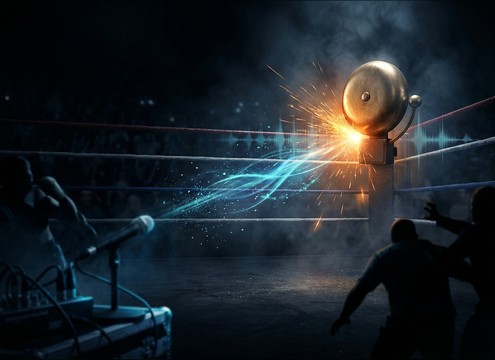
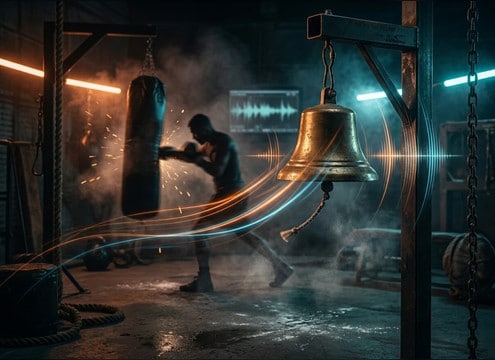
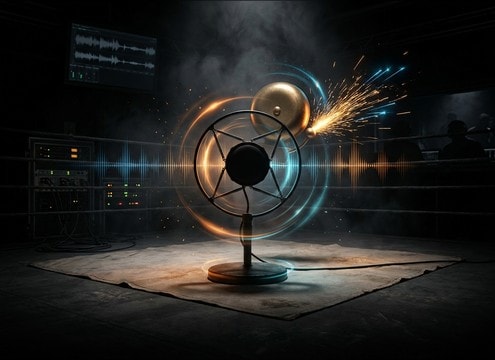
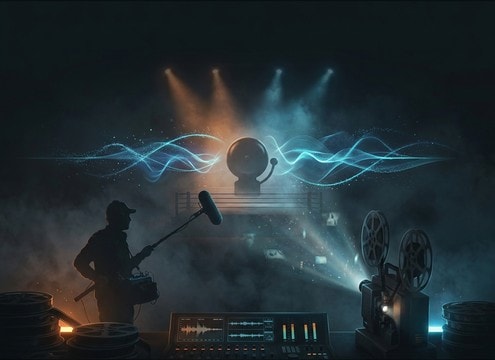
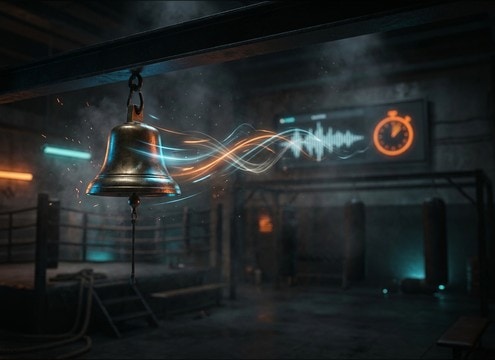




A boxing bell is all about timing and context: one clean strike for a round start, a multi-hit pattern for an end cue, and the right space so it feels like a gym or an arena. Use prompts that specify hit count, distance, and tail length, then regenerate until the transient is clear and the decay does not fight your music or commentary.
Start with the ring pattern
Decide whether your scene needs a single strike, a double tap, or a short sequence. Pattern is what viewers recognize as round start or round end, even before they notice the room.
- Single ring: clean cue for round start graphics
- Double tap: emphasis for highlight edits or transitions
- Three strikes: classic end-of-round feel in 10 seconds
Match the space: gym vs arena
The same bell can feel wrong if the room is off. Ask for dry close-mic when you want clarity, or a bigger reflective space when you want event scale.
- Dry gym: minimal reflections and low ambience for VO clarity
- Ringside: short reflections and moderate stereo width
- Distant arena: softened transient with longer tail and room tone
Control tone, wear, and intensity
Bell timbre changes with material and condition. A bright, hard strike cuts through music, while worn brass reads more vintage and less sharp on the top end.
- Bright and hard: stronger transient and clearer overtones
- Worn brass: slightly dull highs with warmer mids
- Avoid harshness: reduce brittle highs if it clips through the mix
Edit for the cut without artifacts
Once you pick a take, simple edits usually beat heavy processing. Trim pre-roll, fade the tail to fit your next line, and keep the bell peak from stepping on narration.
- Trim to the transient so the bell lands exactly on frame
- Short fade-out if the decay masks commentary or crowd
- Normalize gently, then limit peaks instead of over-compressing