


This phrase is usually a split-second warning that has to read clearly before the blast or impact arrives. When browsing clips or writing a prompt, focus on delivery (shout vs comms), perspective (close vs distant), and the tail (dry vs echo) so the line lands on your edit point without masking the next sound.
Choose the delivery style first
Decide whether the moment is a tactical callout, a safety protocol cue, or a comedic beat. The same words can sound believable or corny depending on pacing and emphasis.
- For action, ask for an urgent shout with a fast attack and no extra words
- For safety, request a clear, steady read with controlled loudness
- For comedy, try an exaggerated or slightly delayed read to set up the cut
Match distance and environment
Perspective sells scale. A close-mic take feels personal and immediate, while a distant yell with air loss and reflections places the listener deeper in the scene.
- Outdoor distance: request reduced high-end and a longer decay without heavy reverb
- Indoor concrete: request strong early reflections and a noticeable tail
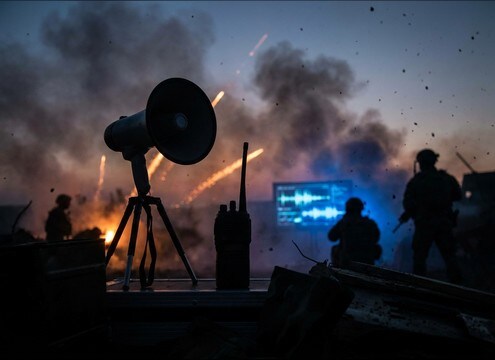
- Radio or PA: request band-limited tone with light static or mild distortion
Make room for the next hit
This callout often sits right before an explosion, debris, or a cut to silence. Pick or generate versions with tails you can trim cleanly. When the same sequence also involves generated or composited visuals, see our guide to AI and VFX workflows for more on visual effects, continuity, and shot control.
- Prefer a short tail when the blast lands immediately after the phrase
- Leave a small pad of room tone if you need to crossfade into ambience
- Avoid takes with long breaths or trailing syllables that overlap impacts
Avoid common realism breakers
Small issues can make a warning line feel like a meme instead of a real cue. Use prompts that keep the performance credible and mix-friendly.
- Avoid extreme clipping or harsh distortion unless the scene is explicitly stylized
- Avoid crowd noise if you need clean dialogue replacement or tight timing
- Avoid adding extra dialogue beyond the phrase unless you need a longer safety script