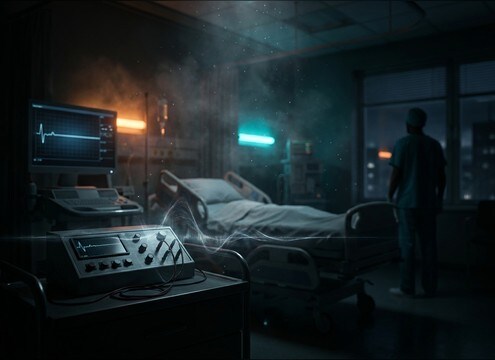
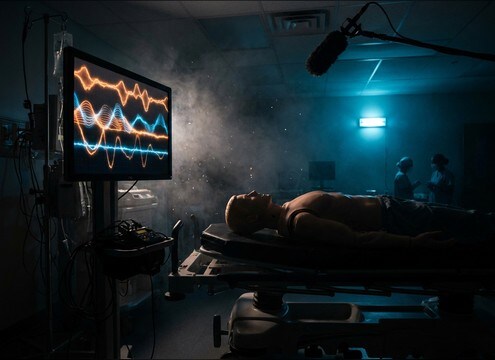
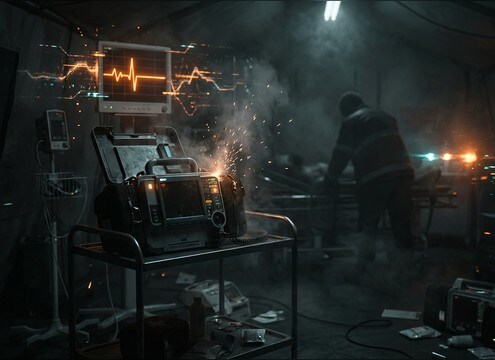

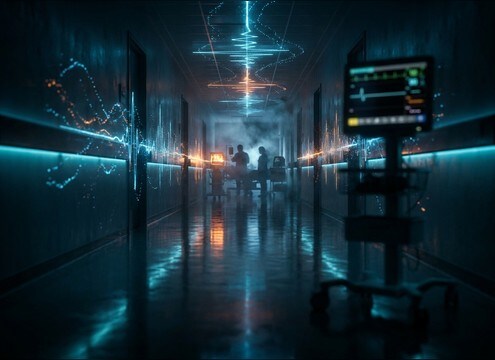
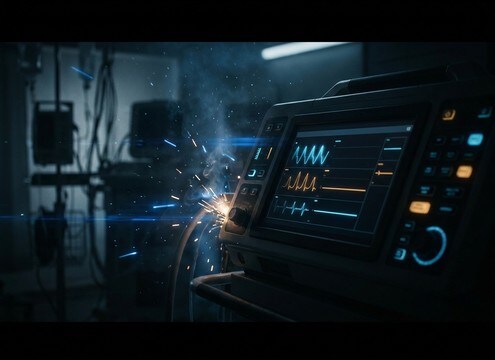
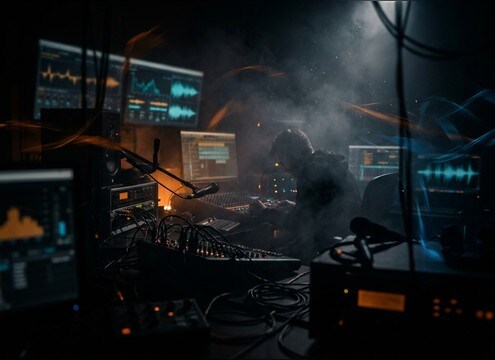


A convincing flatline is more than a long beep. For believable hospital scenes, decide whether you need a clean close-up monitor tone, a distant hallway cue with reflections, or a muffled version that lives behind dialogue. Use prompts that call out transient sharpness, pitch, sustain stability, and how much room tone or equipment hiss should be present.
Start with monitor character
Pick the basic flavor first: modern clinical, vintage speaker-like, or digital and slightly glitchy. This choice affects the texture, perceived loudness, and how the tone reads emotionally on screen.
- Use words like clean, clinical, modern, or sterile for minimal texture
- Ask for vintage, small speaker, boxy mids for older equipment vibe
- Add digital jitter or tiny dropouts only when it supports the story
Match perspective and space
Flatlines often need to sound like they are in a room, not glued to the viewer. Indicate distance, reflections, and stereo width so the sound matches camera position and scene geography.
- Close mic: crisp transient, strong sustain, low room tone
- Hallway distant: softer attack, quieter level, subtle reflections
- Behind a door: reduced highs, narrower stereo, more occlusion
Control sustain, tail, and edit points
Editors need tones that cut cleanly. Request stable sustain and avoid clicks at the end so you can fade out, hold under dialogue, or cut to silence on a frame-accurate moment.
- Ask for stable pitch and consistent level for easy trimming
- Request a smooth tail or a gentle fade to avoid abrupt stops
- If you plan to loop, ask for no clicks and minimal modulation
Avoid common realism killers
A flatline can become distracting if it is too harsh, too loud, or too synthetic for the scene. A small prompt adjustment often fixes it faster than heavy EQ in post.
- Avoid overly piercing highs that mask speech consonants
- Avoid heavy distortion unless the scene calls for broken equipment
- Avoid excessive stereo width for a single bedside monitor source