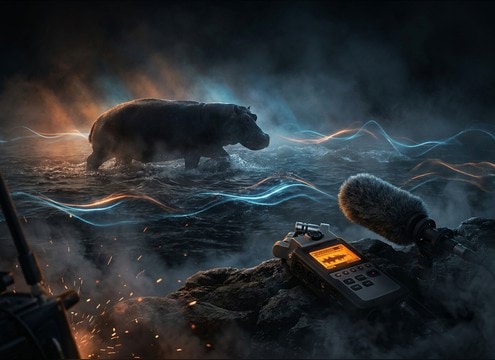

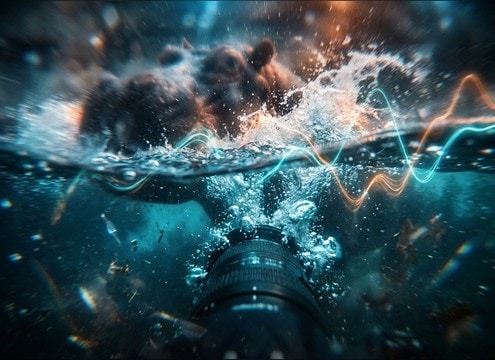



Hippos read as believable when the low-end weight matches the camera distance and the water behavior matches the shot. Use these prompt cues to avoid generic animal roars and to get the right wet texture, tail length, and stereo space for your scene.
Choose the vocal type first
Hippo sounds are often short, breathy, and heavy rather than scream-like. Decide whether you need a grunt, snort, bellow, or a threat huff so the generator targets the right mouth and throat character.
- For calm presence: prompt for short grunts with a tight decay
- For aggression: prompt for a huff or growl with a rougher texture
- For off-screen scale: prompt for a distant bellow with a longer tail
Match distance and space
Distance changes the transient and the tail. Close perspective should feel dry and immediate, while distant calls should have softened highs and more outdoor air tone.
- Close: strong transient, minimal ambience, centered mono feel
- Mid: slight stereo width, small tail, gentle room tone
- Far: softened attack, longer decay, lower detail in the highs
Add water interaction when needed
A hippo in water usually sounds wet: bubbles, splashes, and sloshing. Specify whether the action is submerged, surfacing, or entering water to get the right texture and timing.
- Underwater: muffled exhale, bubble texture, rounded highs
- Surfacing: brief burst of bubbles followed by a wet snort
- Body splash: wide spray, strong hit, watery tail that fades cleanly
Avoid common prompt mistakes
Many generators drift into generic monster roars if the prompt is vague. Keep the language grounded in real animal behavior and do not overdo reverb unless the scene is truly cavernous.
- Avoid: "roar" only, use "grunt" or "snort" plus distance instead
- Avoid excessive echo for outdoor river scenes
- Avoid stacking too many actions in 5 seconds; keep it sync-friendly