



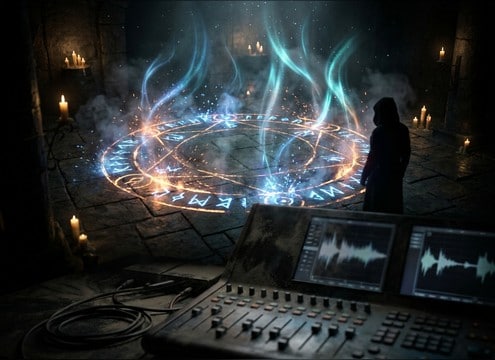





Portal SFX usually fail for two reasons: the transient is too soft to read on the cut, or the tail is too long and masks the next line. Use these prompts and selection checks to match the portal size, the on-screen motion, and the space it lives in, whether you need a quick teleport pop, a loopable hum, or a full open-hold-close cue.
Decide what the portal is doing
Start by naming the action: open, close, pass-through, or sustained active portal. This keeps the generator from giving you a generic whoosh and helps you get the correct envelope and timing.
- For an opening: ask for a fast rise into a clear snap
- For a closing: ask for a reverse pull and a tight stop
- For a hold: ask for a steady hum with subtle modulation
Scale the sound to the visual size
A tiny wrist portal should be bright and compact, while a doorway rift should feel wider with more body. You can communicate scale using stereo width, low-end weight, and how long the decay hangs.
- Small portal: narrow stereo, bright tone, minimal low-end
- Large portal: wider stereo swirl, fuller body, longer decay
- If it feels too big: reduce rumble and shorten the tail
Match the space with the right tail
The tail tells the listener where the portal lives. Use words like dry, small room, hallway, cavern, or outdoor to shape reflections and decay, then choose the clip that leaves room for dialogue and music.
- Indoor lab: short reflections and controlled decay
- Cavern gate: longer reverb tail, but keep the transient crisp
- Trailer cuts: prefer tight tails to avoid masking impacts
Avoid common portal prompt mistakes
Overly complex prompts often produce smeared, noisy results. Keep your request focused on envelope, texture, and space, and avoid asking for multiple different events in a 5-second clip.
- Do not request music, chord progressions, or melodies
- Avoid stacking too many textures (sparks + debris + lasers + voices)
- If you hear clicks: ask for smoother fades and no harsh glitches