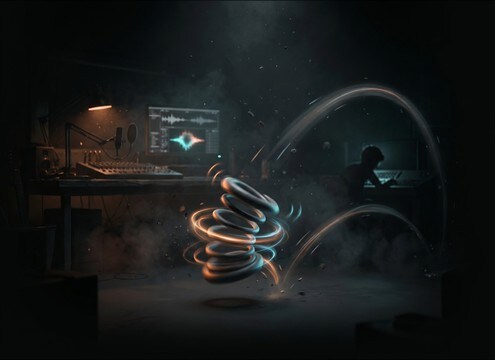
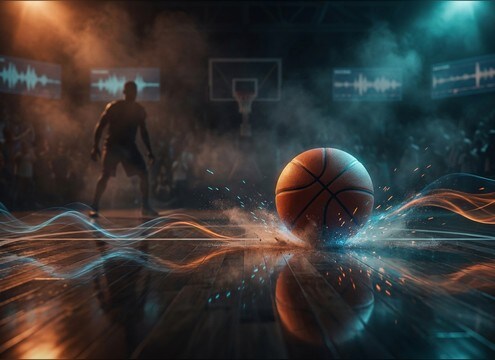
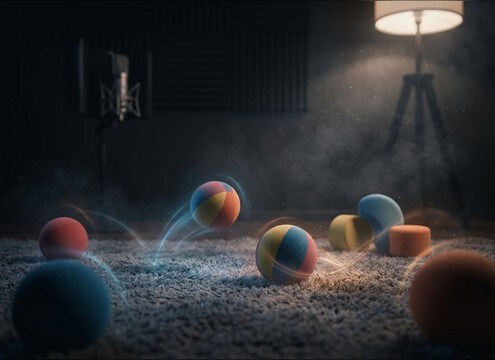
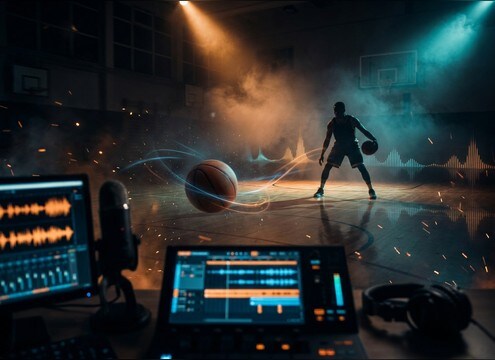


Bouncing is all about the first transient and the spacing between hits. When you prompt, call out the object (rubber ball, basketball, ping pong), the surface (wood, concrete, metal), and whether the bounce is close and dry or distant with reflections. Then refine with words for attack (clicky, thumpy), decay (short, ringing), and rhythm (single hit, fast double, steady dribble).
Pick the object and material
The object choice sets the core pitch and texture. Rubber reads springy, basketball reads thumpy with skin slap, and metal reads bright with a ringing tail.
- Use "rubber ball" for elastic attack and short, snappy decay
- Use "basketball" for lower fundamental and audible slap layer
- Use "ping pong" for tiny clicks with minimal low-end
Call out the surface and space
Surface controls brightness and resonance, while the space determines how much room reflection and tail you hear. This is the difference between a close-up foley bounce and a gym-wide dribble.
- Wood: clear mid click with mild reflections
- Concrete: brighter impact with harder edge and longer decay
- Gym room: add "room reflections" or "room tone" to widen the feel
Specify rhythm and edit friendliness
Decide whether you need a single cue, a short pattern, or a loopable bed. Mention spacing so the generator does not produce random hit timing that fights your animation.
- Single cue: "one bounce hit with a short tail"
- Pattern: "three bounces, each softer and farther"
- Loop: "steady dribble, consistent transients, loopable ending"
Avoid common bounce mismatches
Most bounce SFX problems come from tails that are too long, transients that are too soft, or rhythms that feel mechanical. Use prompt words to steer away from those artifacts.
- If it sounds mushy, ask for "sharp transient" and "clean attack"
- If it rings too much, ask for "short decay" or "dry room"
- If it repeats unnaturally, ask for "natural variation" and "slight timing drift"