


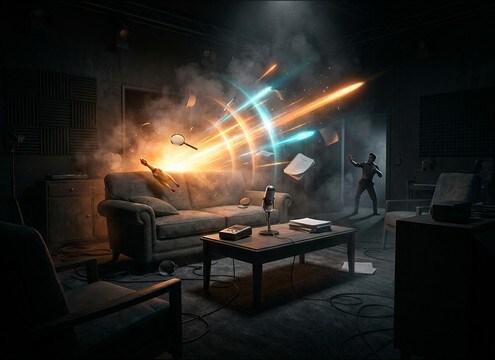






A dun-dun-dun works when the rhythm, tone, and decay match the visual beat. Use prompts that describe the three-hit spacing, whether it is comedic or ominous, and how much room reflection you want. Then regenerate until the transient is crisp enough to read as an accent without masking dialog or music.
Nail the three-hit rhythm
Most edits need the stinger to read instantly: three clear accents with predictable spacing. If your cut is fast, ask for tighter spacing and a shorter tail. If the shot holds, allow a slightly longer final hit and decay.
- Ask for specific spacing like quick, even hits or a longer third hit
- Request a short tail when the next line starts immediately
- Use words like tight transient, crisp attack, or snappy accent
Choose the right tone for the joke or twist
Instrument choice changes the meaning. Brass and low booms feel cinematic and serious. Pizzicato or bright mallets lean playful. Organ and choir can push it toward spooky or melodramatic parody.
- For comedy: bright, bouncy, small-room reflections, short decay
- For suspense: darker mids, controlled low-end, medium tail
- For parody: slightly exaggerated dynamics but keep the rhythm clean
Match space, distance, and tail to the scene
A dry stinger fits tight interiors and dialog scenes. A roomy stinger sells a large hall or dramatic montage. If the sound feels detached, prompt for distance cues like muffled highs or added room tone.
- Close-mic and dry for dialog-heavy moments
- Roomy reflections for big reveals or courtroom-scale spaces
- Stereo width wide for impact, narrower when you need focus
Avoid common dun-dun-dun pitfalls
The wrong stinger can sound like a music cue instead of an SFX accent. Avoid long melodies, overlong reverbs, or excessive sub that muddies speech. Keep it simple and frame-accurate.
- Do not request a full melody or chord progression
- Avoid tails that overlap the next beat unless intentional
- Skip harsh highs or distortion if the scene is comedic or clean