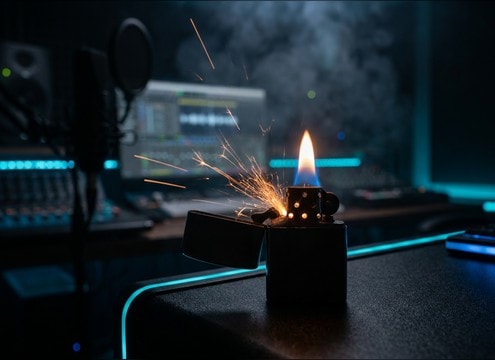

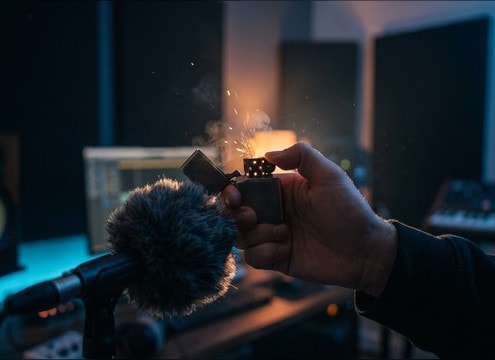

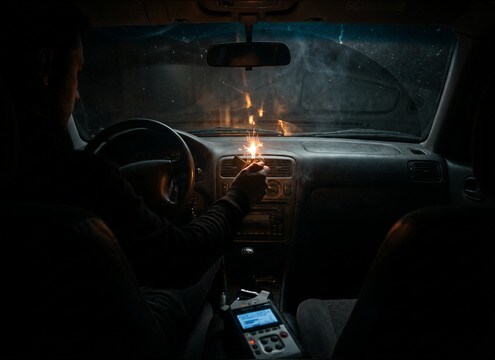


Lighter sounds are small, fast, and easy to overdo. The best prompts describe the mechanical click, whether ignition succeeds, and how long the flame should stay present. Use the guide below to choose the right take from the library or to write prompts for an AI lighter sound effect generator that match your shot timing and space.
Pick the action: click, spark, or ignition
Start by naming the exact moment your audience should notice. A cap snap reads as mechanical foley, while ignition needs a tiny spark and a controlled flame tail. If the story beat is frustration, ask for a misfire sequence instead of a clean light.
- Use words like flick, wheel click, cap snap, spark, misfire, ignite
- Call out success or failure: no flame, brief flame, steady flame
- Mention handling detail if needed: thumb friction, hand movement
Control the transient and the tail
Editors usually need a crisp attack that syncs to the thumb motion, plus a tail that does not fight dialogue or ambience. Ask for a sharp click transient when the lighter is prominent, or a softer transient when the shot is wider. Keep flame decay short unless the flame must remain audible.
- Transient: crisp click, softened click, muted attack
- Tail: tight decay, short flame sustain, longer burn with gentle hiss
- Noise: low noise floor, minimal room tone, no harsh high fizz
Match the space: dry close-up vs roomier distance
A close shot often needs dry, intimate detail, while a hallway or car interior benefits from subtle reflections. Instead of adding heavy reverb later, prompt the perspective so the click and flame sit naturally with the scene and mic distance.
- Close-mic: dry, detailed, minimal reflections
- Distant: muffled highs, light room reflections, reduced transient bite
- Environment cues: indoors, car interior, outdoor wind, quiet room
Avoid common tells that break realism
Lighter SFX feel fake when the click is too loud, the flame sounds like a torch when it should be small, or the hiss masks everything. If your first generation is too aggressive, reduce the hiss, shorten the sustain, and request cleaner transients with less grit.
- Avoid oversized fire: keep flame small unless you want a torch lighter
- Avoid long constant hiss that masks dialogue and ambience beds
- Avoid excessive debris or crackle that belongs to matches or campfires