

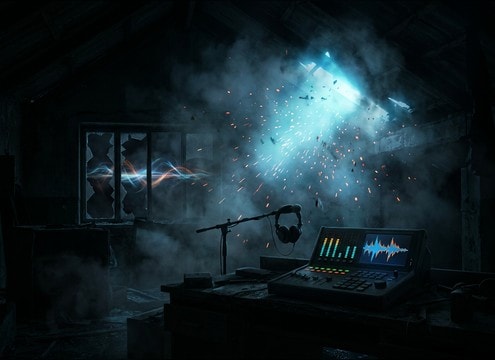



A good bang is less about being loud and more about fitting the shot: the transient must land on the frame, the tail must match the space, and the texture should suggest what hit what. Use the tips below to choose a download-ready clip or write a prompt that generates the exact slam, impact, or accent you need.
Match the transient to the cut
For frame-accurate impacts, prioritize a clean, sharp attack. If the scene already has cymbals, glass, or bright dialogue, a softer transient can read clearer and avoid harshness.
- Use words like sharp crack, snappy, or softened attack in prompts
- For comedic beats, keep the transient bright but the tail very short
- If the bang feels late, choose a tighter attack and less pre-echo
Choose a tail that fits the space
The same slam can feel wrong if the decay does not match the environment. Dry bangs work for close interior actions, while reflective tails sell halls, stairwells, or big rooms.
- Specify dry, small room reflections, hallway echo, or large hall reverb
- For dialogue scenes, keep decay short so words stay intelligible
- For off-screen bangs, add air and longer fade to imply distance
Hint the material and texture
Material cues help the listener believe the moment. Metal tends to ring, wood is rounder in the mids, and debris adds gritty detail that reads as damage or mess.
- Add metal slam with ring, wooden thud, or gritty debris ticks
- If the bang masks music too much, reduce low-end thump in the prompt
- Avoid overly noisy tails when you need repeatable, clean accents
Keep it mix-ready
A bang should sit in your mix without constant fixes. Aim for controlled low-end, predictable stereo width, and tails that do not wash over the next action.
- Ask for centered mono or moderate stereo width depending on your scene
- For fast action, choose shorter decay to prevent smearing between hits
- If it sounds thin, prompt for a stronger body thump without extra reverb