


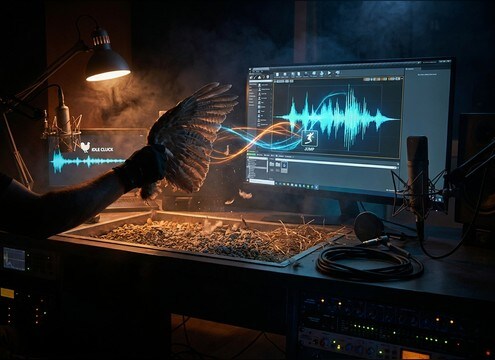


Turkey audio can read as realistic wildlife, background farm texture, or a punchline, depending on the call type, distance, and tail. Use the library for quick placements, then prompt the AI for tighter timing, cleaner noise floor, or a more distant perspective. The goal is to match what the camera suggests: how close the bird is, how lively it feels, and how much space you want around the call.
Pick the right call type first
Start by deciding what the turkey is doing on-screen. Gobbles feel bold and attention-grabbing, clucks read as calm chatter, and yelps can signal alertness. Choosing the right call type reduces the need for heavy EQ later.
- Close reaction: short gobble with a quick decay
- Background presence: soft clucks with low masking
- Tension cue: sharper yelps with slightly higher pitch
Match distance with attack and tail
Distance is more than volume. Close sounds keep crisp transients and detail, while distant calls lose high end and feel smoother with more air. Prompt for distance so the sound sits naturally with your camera framing.
- Close: dry, crisp attack, minimal room tone
- Mid-distance: slight ambience, gentler transient
- Far field: airy roll-off, soft reflections, longer perceived tail
Control timing for edits and dialogue
Turkey sounds can easily step on voice lines or comedic beats. Use shorter durations for punch-ins and prompt for pauses when you need a phrase you can cut between shots. For beds, prioritize consistent texture and stable noise floor.
- Stingers: 5-second single call with a tight tail
- Phrases: 10-second sequence with clean gaps between calls
- Beds: 20-second ambience that avoids sudden spikes
Avoid the common giveaway artifacts
The fastest way to break realism is a call that sounds too synthetic, too wet, or too busy. If you hear odd warbles, unnatural reverb, or pumping noise, regenerate with simpler wording and clearer constraints.
- Avoid extreme pitch wobble unless you want cartoon style
- Avoid heavy reverb tails that do not match the environment
- Avoid loud background wind or broad hiss in quiet scenes