
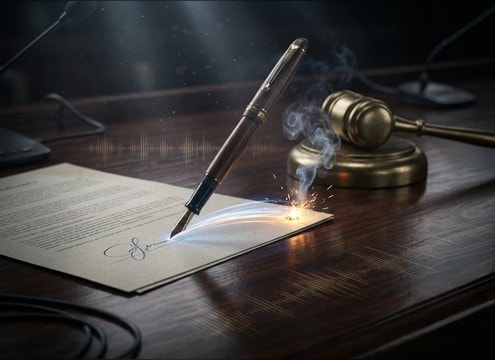
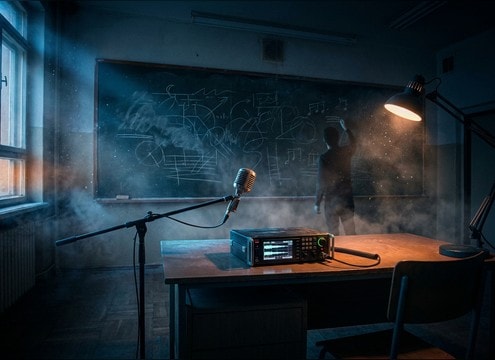
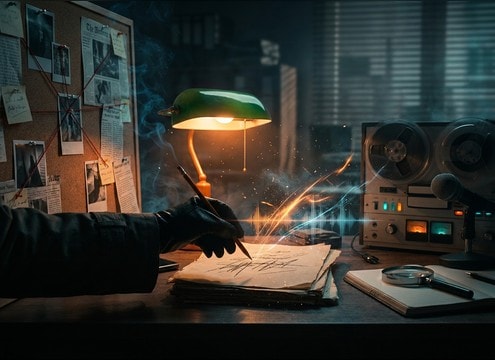


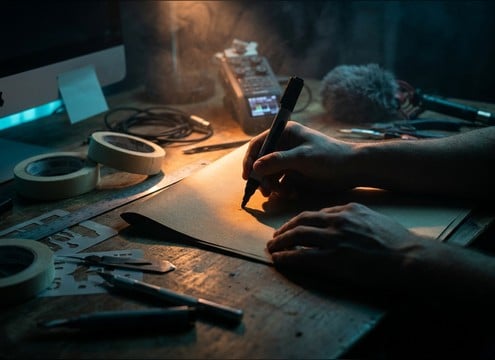


Writing sounds are easy to overdo: too much squeak feels fake, and too little texture disappears under dialogue. When you pick a clip or write an AI prompt, focus on the tool, the surface, and the rhythm of the hand. A signature has a different attack and stop than continuous journaling, and chalk needs more grit plus room tone to feel like a classroom.
Start with tool and surface
Name the writing instrument and what it is touching. The same motion sounds radically different on smooth notebook paper, thick stationery, or a dusty chalkboard.
- Pen: crisp attack, short tail, lower noise floor
- Pencil: grainy friction, softer highs, slightly wider texture
- Chalk: gritty scrape, powdery noise, board resonance
Specify rhythm, pauses, and pressure
Writing is not a constant stream. Prompts that mention pace and pressure produce more believable micro-dynamics and fewer random artifacts.
- Use words like quick jot, careful print, hurried scribble, or slow cursive
- Ask for natural pauses at word breaks instead of nonstop scratching
- Call out light pressure vs heavy pressure to control brightness and grit
Match perspective and space
Decide whether the audience is inches from the page or across the room. Perspective changes stereo width, room reflections, and how much detail you should hear.
- Close-up: dry, detailed transients, minimal room tone
- Medium: some room reflections, reduced scratch detail
- Wide classroom: audible ambience, chalk taps, broader stereo
Avoid common mismatches
Most writing SFX problems come from a wrong material cue or an unrealistic ending. Use prompts to remove what your scene cannot support.
- Avoid loud squeaks unless the shot shows a marker or glossy surface
- Avoid page turns or pen clicks when the hands never leave frame
- Avoid overly long tails in quiet dialogue scenes; ask for a tighter decay