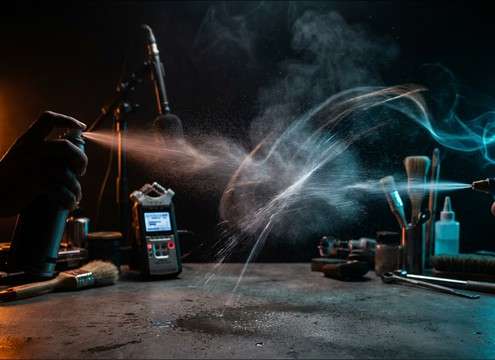
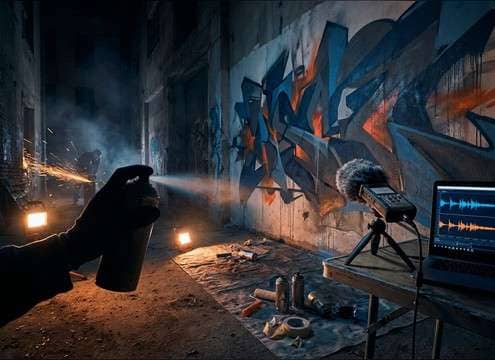
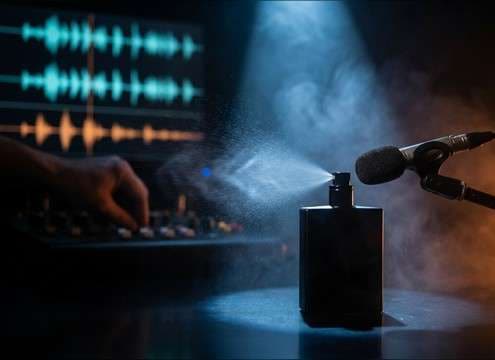
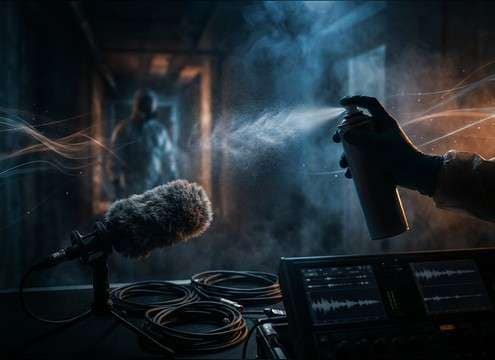
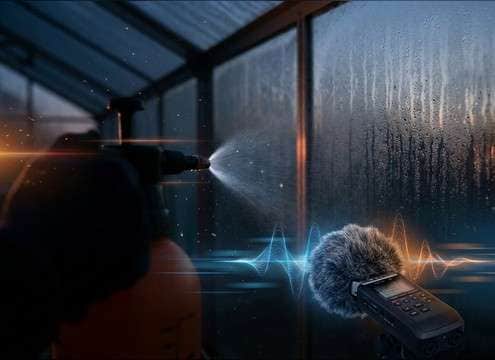


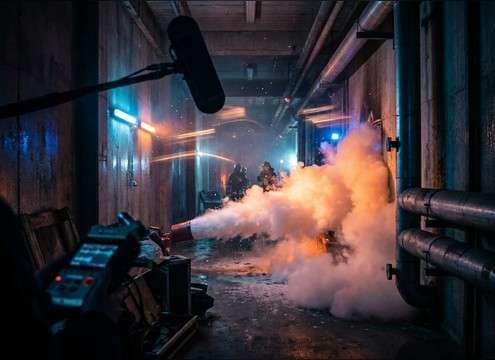


Spray audio changes a lot with the dispenser, the pressure, and how close the mic feels. Use the library when you need a ready burst, then refine with AI prompts when you must match a specific prop (aerosol can versus trigger bottle), a particular intensity (fine mist versus forceful blast), or a space (dry studio versus reflective bathroom).
Name the dispenser and action
Start by stating what is making the spray and how it is used. Aerosols usually have a valve click and a steady hiss body, while trigger bottles add mechanical squeeze and release. If the visual shows a sweeping pass, ask for a continuous spray; if it shows quick taps, ask for short pulses.
- Use words like aerosol can, trigger bottle, pump sprayer, mister, air duster
- Specify action: quick spritz, sustained press, sweeping pass, repeated pulses
- Ask for mechanical details: valve click, trigger squeak, can rattle
Control harshness and masking
Sprays can get piercing in the 6 to 10 kHz range and can easily mask speech. Prompt for a smoother top end when the sound sits under dialogue, or a brighter hiss when it is a hero foley moment. If you need the spray to read on small speakers, request a clear transient and controlled noise floor.
- For dialogue scenes: smooth hiss, low sibilance, quieter noise floor
- For close hero foley: crisp transient, brighter texture, minimal ambience
- If it feels too aggressive: ask for less high-end and a shorter tail
Match distance and space to the scene
A close perspective emphasizes valve clicks and texture; a distant perspective shifts focus to room reflections and overall wash. For bathrooms or tiled rooms, prompt for audible reflections and a slightly longer decay. For outdoor gardening, keep reflections low and add a subtle air bed instead.
- Close: louder click, detailed hiss grain, tighter stereo image
- Indoor reflective: more room tone, longer decay, audible reflections
- Outdoor: minimal reverb, light ambience, softer tail
Avoid common mismatches
The fastest way to break realism is using the wrong spray type for the prop or a tail that is too long for the hand motion. Watch for looping artifacts on sustained mist, and avoid overly cinematic whooshes when the action is a small household spritz. If the edit needs consistency across multiple cuts, regenerate a set with similar texture and loudness.
- Do not use extinguisher-style whoosh for perfume or cleaning sprays
- Avoid long decay when the hand releases quickly on screen
- For repeated cuts, generate several takes with matched intensity