



Toilet flush audio is easy to recognize and just as easy to get wrong. The biggest differences are perspective, how much refill you hear, and whether the bathroom reflections feel like tile or a muffled apartment. Use the tips below to choose a library clip quickly or write a prompt that generates a flush with the right attack, swirl texture, and tail length for your edit.
Start with perspective and distance
Decide if the listener is in the stall, at the sink, or outside the door. Distance changes the transient bite, high-frequency detail, and how obvious the reflections are.
- Close: sharper attack, more splash detail, shorter perceived distance
- Mid: balanced swirl with mild room tone and moderate decay
- Distant: softened highs, more room reflections, lower masking over dialogue
Control refill tail and timing
Many edits need either a quick flush that ends cleanly or a longer sequence that includes the refill. Call out tail length explicitly so the ending does not feel chopped.
- Ask for a brief gurgle tail when you need a tight comedic button
- Request an audible refill start when the scene stays in the bathroom
- Use a 10s or 20s prompt when you need the refill to carry the moment
Match the bathroom space
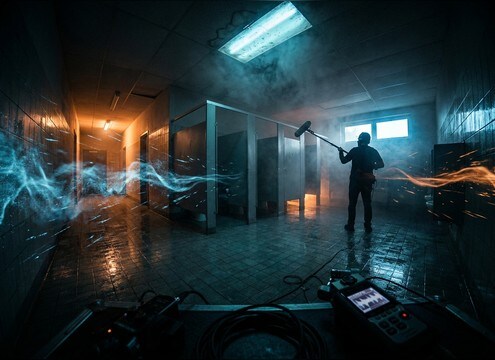
Bathrooms reveal themselves through reflections. Tile adds bright slap; larger restrooms extend the decay and often include a faint ventilation bed.
- Small tile: bright early reflections, quick decay, narrow stereo
- Public restroom: wider stereo, longer tail, subtle fan ambience
- Apartment: restrained reflections and lower overall loudness
Avoid common flush mistakes
A flush that is too boomy, too hissy, or too wet can sound fake fast. Keep the transient clean and the tail natural, then leave headroom for dialogue.
- Avoid clipping or overly aggressive loudness that makes water sound crunchy
- Avoid exaggerated low-end rumble that reads like a drain pipe hit
- Avoid a hard cutoff; use a short fade so decay and room tone feel continuous