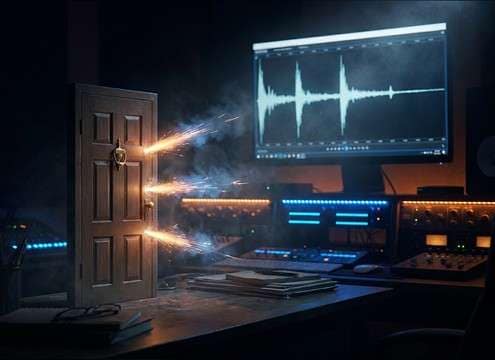
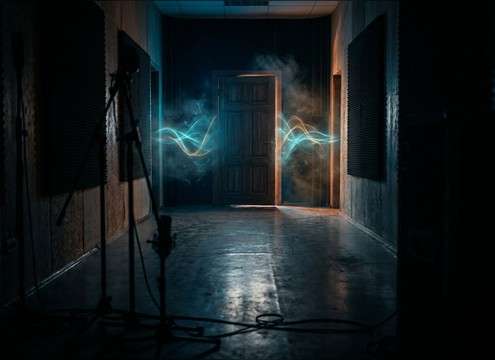
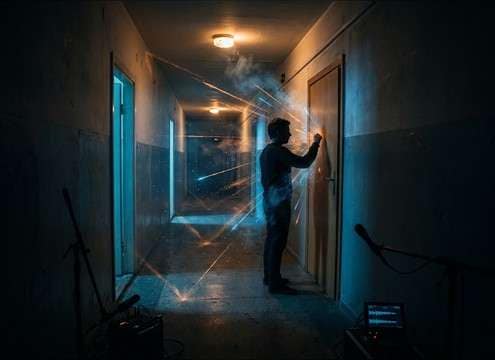
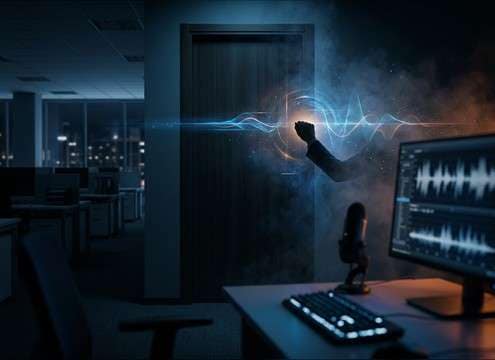

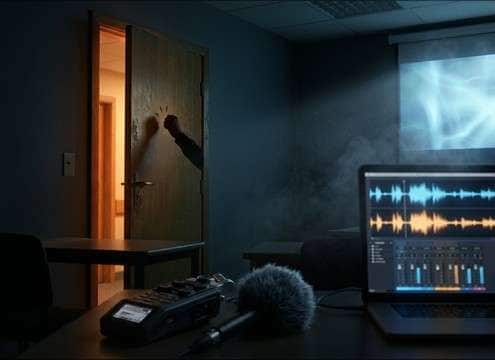


A triple knock is all about rhythm, material, and how much space you leave for the room tail. When browsing, listen for the transient clarity on each hit and whether the decay supports your scene. When prompting, call out the door type, distance, and whether you need a dry studio feel or audible hallway reflections so the knock reads clearly under dialogue and ambience.
Match the knock rhythm to the story beat
The same knock pattern can feel polite, urgent, or ominous depending on spacing and intensity. Decide whether you need three evenly spaced taps, a fast burst, or a slightly uneven human feel that sounds real on camera.
- For urgency, ask for faster spacing and stronger attack on hit 1 and 2
- For comedy timing, keep a tight transient and a short decay so dialogue lands right after
- For suspense, request slower spacing with a softer first hit and a longer tail
Pick the right door material and resonance
Wood knocks tend to be warm and controlled, hollow doors add a boxy thump, and metal doors introduce bright ring. Material choice affects masking against music, HVAC, and crowd beds.
- Wood: balanced mids, easy to place under speech
- Hollow core: more low-mid boom, can feel louder than it is
- Metal: bright transient and short ring, great for industrial scenes
Dial in distance, reflections, and tail length
Perspective sells location. A close knock is direct and dry, while a hallway knock has thinner direct sound and more reflections. Tail length should match how live the space is and how quickly you cut away.
- Close mic: minimal room tone, tight decay for clean edits
- Hallway: add reflections and longer decay to imply depth
- Through-door: slightly muffled highs with a softer transient edge
Avoid common selection mistakes
Triple knocks are short, so small issues stand out. Watch for unrealistic ringing, uneven noise beds between hits, or a tail that fights your next line of dialogue.
- Avoid overly sharp clicks that sound like tapping on glass instead of a door
- Avoid heavy low-end thumps that trigger compressors on your dialogue bus
- Avoid abrupt cutoffs; use a natural decay or add a short fade-out