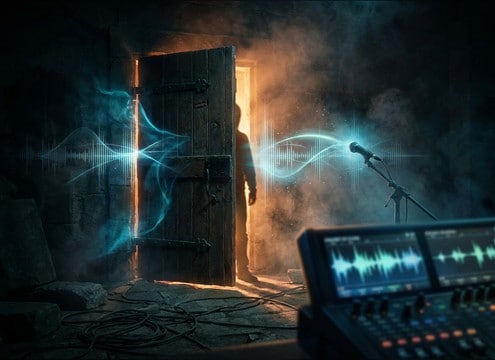
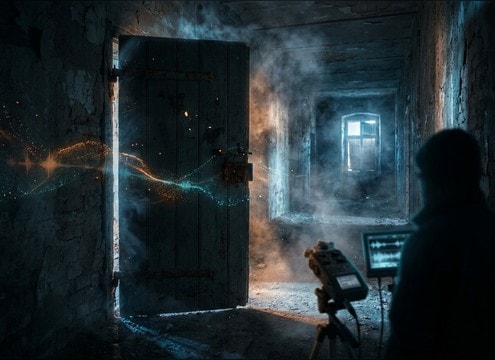



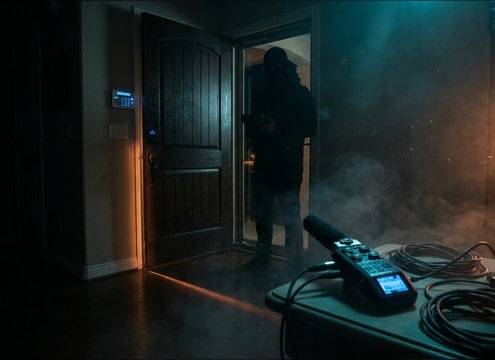
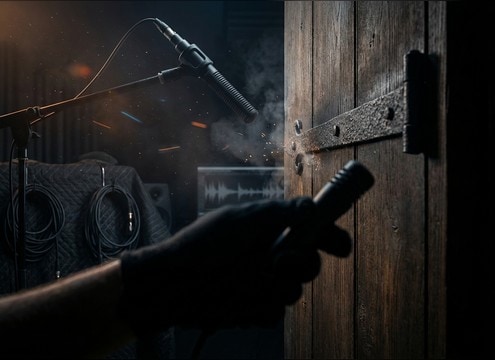


Door opens are easy to spot when they do not match what is on screen. The trick is to prompt for the material and hardware first, then lock in timing and perspective. Use the prompts below to control the latch transient, hinge texture, and how much room tone sits in the tail, so the open feels connected to the space and the camera distance.
Start with material and hardware
A wood interior door, a metal fire door, and a glass storefront door all speak differently. Naming the surface and the handle type helps the generator produce the right transient and resonance.
- Material: wood, hollow-core, metal, glass
- Hardware: latch click, deadbolt release, handle clunk, bell jingle
- Condition: new and quiet, worn hinge squeak, old creaky frame
Match speed and story beat
The motion curve matters. A fast push has a tight attack and short tail. A slow reveal needs a longer build with creaks and a lingering decay that supports tension.
- Speed: quick swing, normal open, very slow reveal
- Intensity: gentle, firm, forceful without slamming
- Timing: put the latch at the start or delay it for suspense
Dial in distance and room tone
Perspective sells reality more than volume. A close door has crisp detail and wider stereo cues. A distant hallway open is softer, with more reflections and less latch definition.
- Distance: close-mic, mid, distant hallway
- Space: small room, tiled corridor, stairwell reflections
- Tail: short decay for tight cuts, longer decay for wide shots
Avoid common door SFX problems
Most bad door opens fail because they are too wet, too loud, or too busy. Keep the noise floor controlled and the action readable so it does not fight dialogue or footsteps.
- Avoid overly long reverb that does not match the location
- Avoid random extra bangs or secondary impacts unless visible
- Avoid harsh squeaks that mask speech, unless the scene needs it