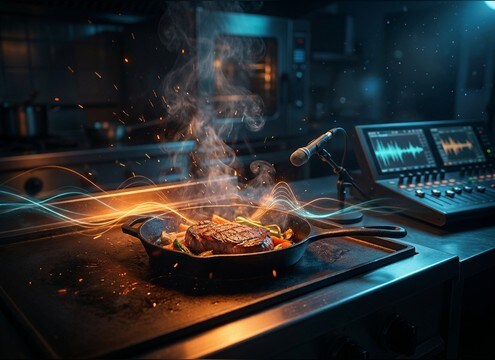
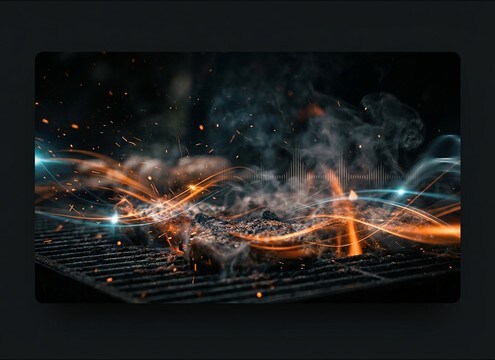
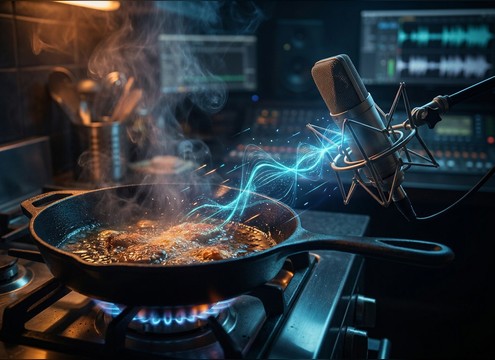
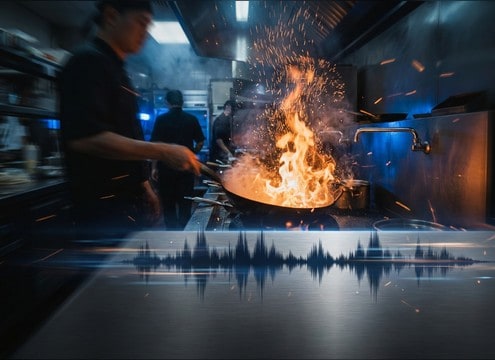
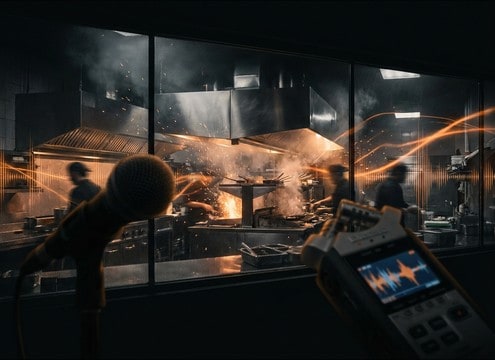
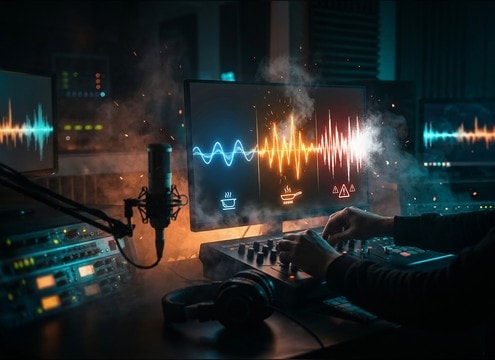
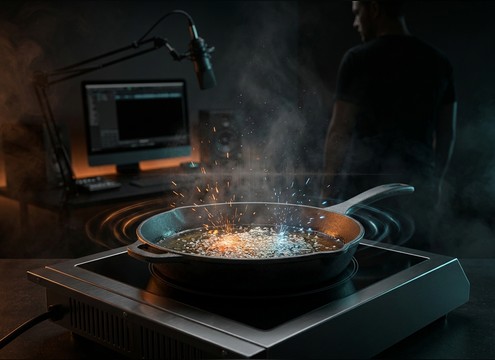
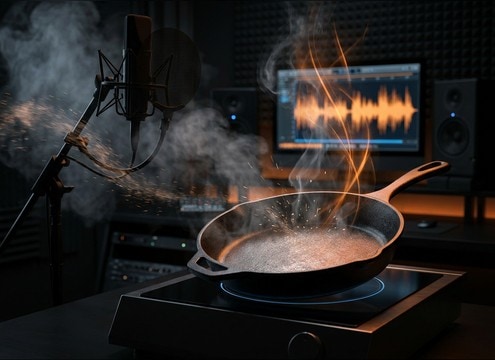


Sizzle can read as buttery and soft, sharp and high-heat, or thick and smoky. When you preview clips or write prompts, focus on the cooking surface, the heat level, and how close the listener is. That determines transient bite, crackle density, tail length, and how much room tone you want under the scene.
Match the cooking surface
Different surfaces create different textures. A skillet tends to be tighter and more mid-forward, while a grill adds airy hiss and grit. A fryer becomes a steady bubbling bed that can mask edits.
- Skillet: sharper attack, cleaner tail, less grit
- Grill: hiss plus subtle ember texture, slightly wider space
- Deep fryer: continuous bed, smoother transients, loop-friendly
Set heat and intensity
Heat level changes the transient shape and pop rate. Higher heat usually means brighter highs, more crackle, and faster micro-pops. Lower heat reads as simmering fizz with softer edges.
- Low heat: softer fizz, fewer pops, shorter sparkle
- High heat sear: brighter top end, denser crackle, stronger masking
- Dynamic ramp: start moderate, peak, then settle for realistic action
Choose perspective and space
A close sizzle sells detail for macro food shots, while a slightly distant version supports wide shots without stealing focus. Room reflections can help place the action in a home kitchen or a larger commercial space.
- Close-mic: minimal room tone, crisp transients, intimate detail
- Mid distance: slightly softer highs, more natural air and tail
- Roomy kitchen: subtle reflections for believable environment
Avoid common sizzle problems
Bad sizzle can sound like white noise, harsh static, or random popping that does not match the cut. Pick clips with controlled noise floor and consistent texture, then regenerate if the tone feels wrong for the food or pan size.
- Avoid overly bright hiss that competes with dialogue consonants
- Avoid irregular loud pops if the visuals are calm or slow-motion
- Avoid long, washy tails that blur quick cooking edits