
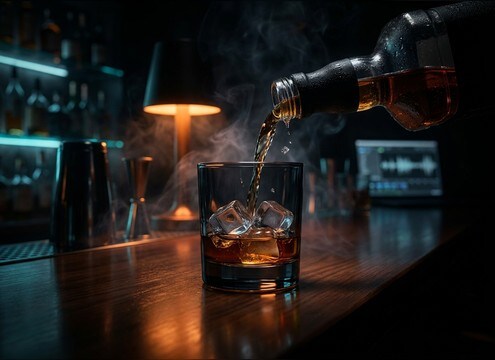
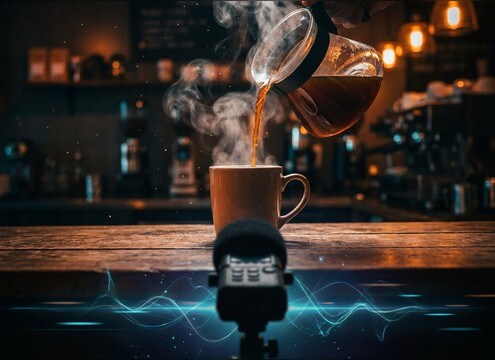
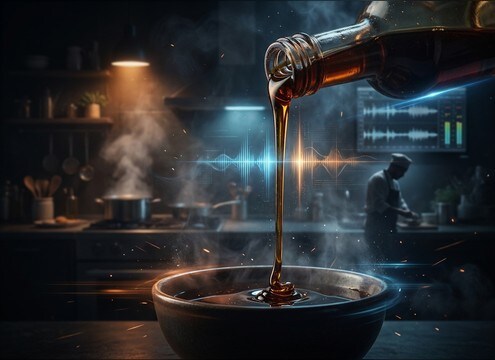
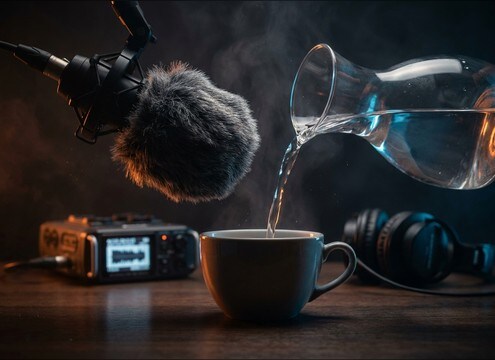
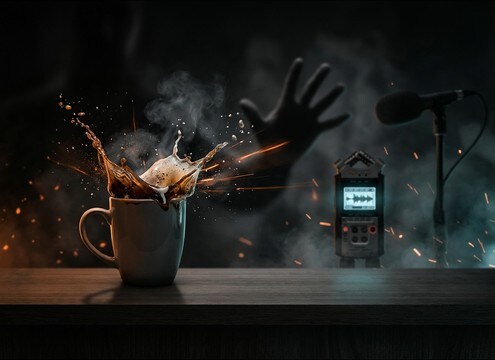
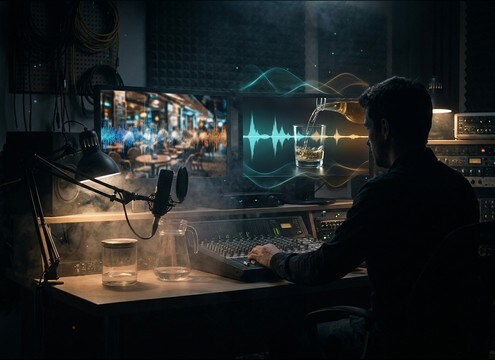


Pouring audio is all about timing and texture: a clear start transient when the stream begins, believable container resonance, and the right amount of splash or glug. Use these prompt tactics to get a pour that matches what the viewer sees, whether it is a gentle kettle pour, a fast bottle dump, or a thick syrup drizzle.
Choose the liquid behavior
Tell the generator what the liquid should feel like. Thin liquids read as airy and bright, while thick liquids need slower motion cues and a stickier tail.
- Thin: water, tea, clear spirits; crisp attack and lighter splash
- Medium: coffee, juice; softer highs and smoother stream noise
- Thick: syrup, honey, sauce; slower onset and longer drip decay
Match the container and resonance
The vessel shapes the tone. Glass adds a bright ring, ceramic softens reflections, and metal introduces a more obvious ping and narrower resonant peaks.
- Glass: brighter splash with short ringing harmonics
- Ceramic: rounder body with reduced high-end splatter
- Metal: sharper transients with a clearer metallic decay
Dial perspective and room tone
A close mic emphasizes detail like bubbles and drips, while a more distant perspective adds room reflections that help it sit in a wider shot.
- Close-mic: low room, high detail, minimal reflections
- Kitchen room: light ambience and short reflections
- Bar or cafe: slightly longer tail and more background air
Avoid common pour mismatches
Most pours fail because they are too splashy for the picture, too loop-like, or cut off before the last drip. Fix it by adjusting intensity and tail behavior in the prompt.
- If it sounds like rain, reduce splash density and high-frequency spray
- If it pumps unnaturally, ask for a steady stream with consistent level
- If the cut feels abrupt, request a final drip and short natural decay