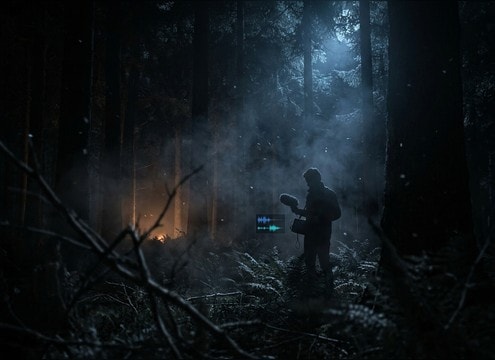
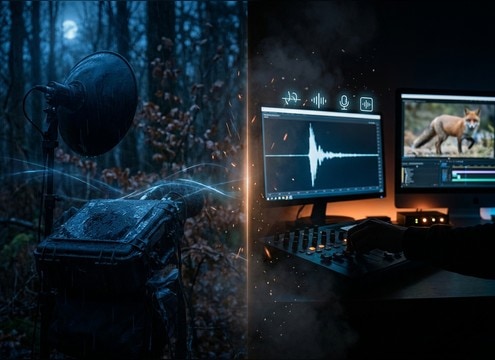







Fox vocals are easy to misread as small dogs if the pitch, rasp, and tail are wrong. When choosing a clip or writing a prompt, focus on the call type first, then describe perspective and environment. A close bark needs a tight transient and minimal room tone, while a night call often benefits from a softer attack and a longer outdoor decay. Use these checks to get a believable result fast.
Choose the right vocal type
Start by naming the behavior: vixen scream, warning bark, chirps, yips, or a low snarl. This prevents the generator from drifting into generic canine sounds and helps you get consistent phrasing across variations.
- Use clear nouns: vixen scream, single bark, pup yips, snarling growl
- Ask for pacing: single call, double call, or short sequence with pauses
- Describe tone: raspy, breathy, sharp, or muted
Set perspective and space
Distance changes the high-end bite and how much tail you hear. Describe whether the fox is near the mic, across a clearing, or behind trees, and whether you want a dry take or one with subtle forest ambience.
- Close: crisp transient, minimal tail, low room tone
- Distant: softer highs, lower presence, more audible ambience bed
- Environment: forest at night, open field, or near a cabin wall for faint reflections
Make it edit-friendly
For clean placement in a mix, control noise floor, peaks, and stereo width. A short clip for jump moments should end cleanly, while a longer sequence should keep consistent space so it can sit under an ambience loop.
- Ask for clean background and no music to reduce masking
- Specify tail length: quick decay for cuts, longer decay for atmosphere
- Request stereo width only when needed; keep close calls narrower
Common mistakes to avoid
A believable fox sound can be ruined by the wrong tail, exaggerated reverb, or a dog-like bark. Call out what you do not want so results stay realistic and easier to mix.
- Avoid heavy echo or cavern reverb unless the scene is indoors
- Avoid cartoon squeaks or wolf-like howls if you need realism
- Avoid constant background hiss if you plan to layer with a forest bed