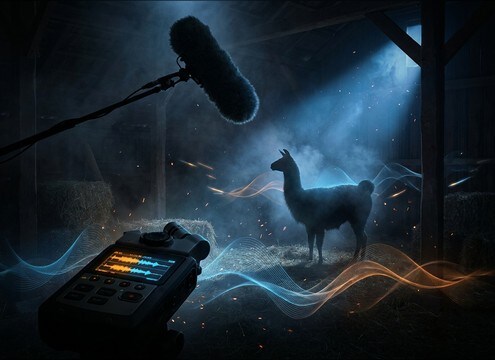
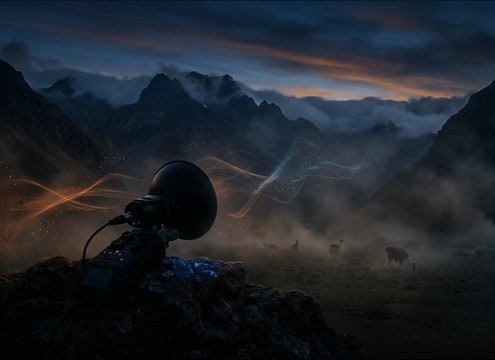


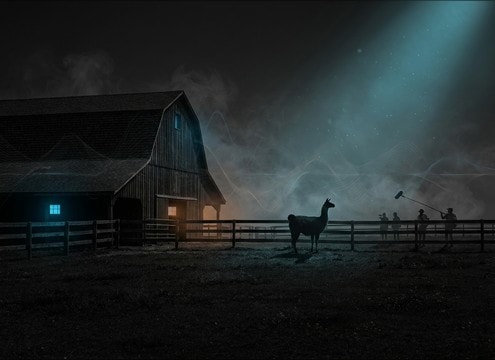


Llamas can read as cute, curious, or threatening depending on the vocal type and how close it feels. Use prompts that specify the behavior (bleat, hum, snort, spit), the perspective (close vs distant), and the space (barn vs open pasture). Then choose durations that match your on-screen action so the transient hits on time and the tail does not step on dialogue.
Choose the right vocal behavior
Start by naming the exact behavior, not just llama sound. A bleat is brighter and more percussive, while a hum is smoother and can act like a texture. A snort reads as alert, and a spit needs a clean, fast transient to sell the gag.
- Use keywords like sharp bleat, gentle hum, nasal snort, wet spit burst
- Add intent: curious, annoyed, startled, calm, defensive
- Ask for clean background if you plan to layer it into a busy scene
Set perspective and space
Distance changes everything. Close takes need detail and low noise, while distant calls need softened highs and a more obvious tail. Mention whether the scene is open air, a small stall, or a larger barn to get believable room tone and reflections.
- Close mic: crisp attack, short tail, minimal ambience
- Distant: reduced high end, airy tail, lighter direct sound
- Barn: subtle room tone and short reflections, not huge reverb
Match timing with duration
Pick a duration that fits the edit so you do not fight the clip later. Short reactions usually live in 5 seconds, movement moments may need 10 seconds, and establishing beds benefit from 20 seconds with loop-friendly stability.
- Use 5s for single reactions, snorts, quick bleats, and spit hits
- Use 10s for short action like fence scuffles or a few steps
- Use 20s for ambience beds with occasional, spaced vocal accents
Avoid common prompt pitfalls
Overly broad prompts often produce muddy ambience or exaggerated comedy artifacts. Keep the request specific, and avoid stacking too many different actions in one clip unless you want a chaotic result.
- Avoid vague prompts like animal noise with no behavior specified
- Do not request heavy echo unless the scene is actually a large interior
- If the sound is too harsh, ask for softer highs or less sibilance