
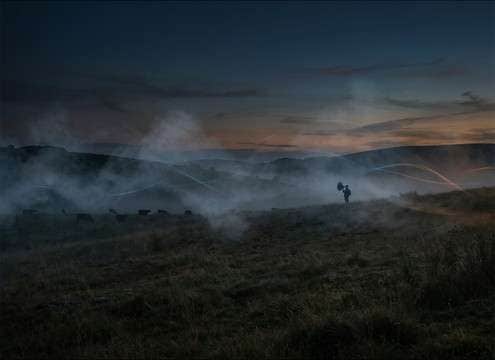



Cow audio is all about perspective and intent: a close moo for a character beat, a distant call that implies a pasture beyond frame, or a barn take where reflections and room tone sell the interior. Use the tips below to choose the right library clip or write a prompt that controls intensity, tail length, and background texture so the sound sits naturally in your scene.
Choose the cow type and call style
Start by naming what is making the sound and why. Adult cows tend to have a fuller low-mid body, while calves are higher and thinner. The emotion matters too: calm calls are smoother, while demanding calls have a harder start and more rasp.
- Adult moo: fuller body, longer vowel, stronger low-mid
- Calf call: higher pitch, quicker onset, shorter decay
- Add intent words: calm, impatient, startled, sleepy
Match distance, tail, and environment
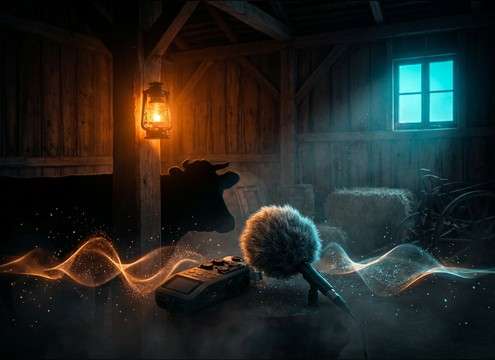
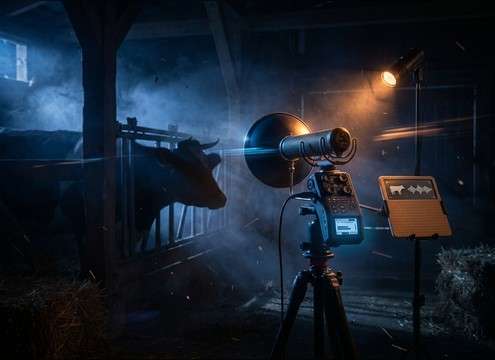
The same moo reads very differently depending on space. Barn interiors add early reflections and a short reverb tail, while open fields feel drier but with more air loss at distance. Pick the version that fits the camera position and cut length.
- Close: dry, detailed texture, minimal room tone
- Distant: softer highs, longer perceived tail, more ambience
- Barn: audible room tone, short slapback, tighter stereo
Use herd layers and movement wisely
Herd ambience should support the scene, not dominate it. For wide shots, a gentle bed with occasional calls works better than constant overlapping moos. If animals are moving, look for subtle stereo shifts and hoof shuffles to add realism.
- Keep herd beds lower in level to avoid masking dialogue
- Prefer occasional calls over nonstop overlapping moos
- Add movement cues: pass-by, slow approach, pen shuffle
Avoid common cow SFX mistakes
Bad cow sounds are usually too clean for a farm context or too exaggerated for a realistic scene. Watch out for harsh resonances, overly long artificial reverb, or obvious loops that repeat on the same beat.
- Avoid metallic ringing or synthetic vocal artifacts
- Avoid tails that are longer than the visual space suggests
- Avoid tight loops with identical timing and phrasing