
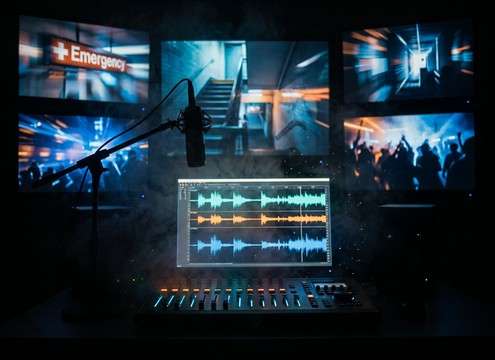
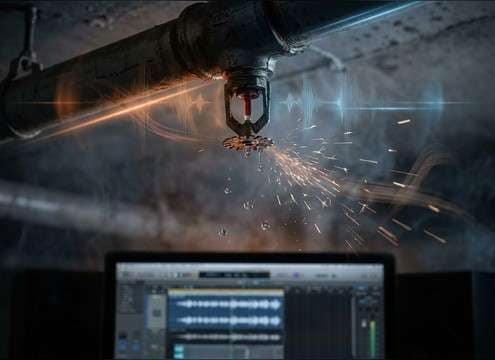


Fire alarms are easy to recognize but hard to match. The right choice depends on the alarm type (horn, bell, or voice evac), the cadence pattern, and whether the listener is in the same room, down a corridor, or outside. Use the tips below to pick a downloadable clip or write prompts that control harshness, decay, and perceived distance without making the alarm feel fake or overly cinematic.
Pick the alarm type and cadence
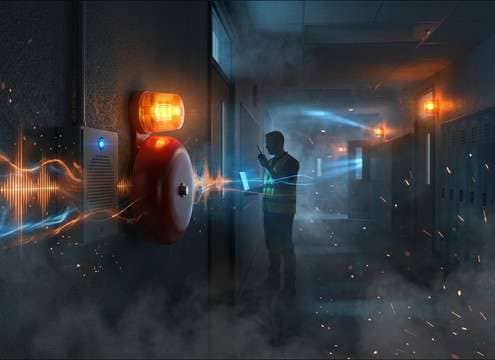
Start by deciding what the device is. Modern systems often use horn pulses, older buildings may use bells, and many commercial spaces add voice evacuation. Cadence matters: repeating bursts feel like a building system, while a single sustained tone can read as a generic siren.
- Prompt: "horn strobe style pulses" or "mechanical bell ring"
- Specify pattern words like "pulsing", "steady", or "three-beep cadence"
- Avoid mixing bell and horn textures unless your scene shows multiple sources
Match distance with tone and reflections
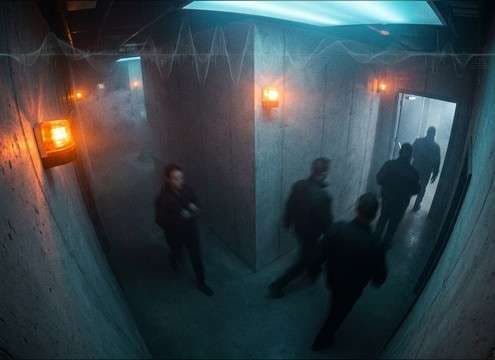
Distance is more than volume. Close alarms have sharper transients and more high end. Distant alarms lose brightness, pick up room tone, and often smear into reflections in hallways and stairwells.
- Close: crisp attack, minimal tail, low noise floor
- Distant: rolled-off highs, softer transient, more ambience bed
- Stairwell: stronger early reflections and longer reverb decay
Control harshness so it edits well
Fire alarms can be piercing, which is realistic, but they can also wreck dialogue and cause listener fatigue. Choose or generate versions with the right bite, then shape the intensity by selecting a cleaner tone, shorter tail, or less aggressive high end.
- If it masks speech, pick a less bright take or a more distant perspective
- For quick cuts, prefer tight tails so the alarm does not smear across edits
- Avoid clipping or overly distorted alarms unless the speaker is visibly damaged
Decide if you need a loop bed
Many scenes need the alarm to run under action. In that case, look for consistent cadence and stable tone so you can loop without obvious jumps. For short moments, a 5-second sting is often enough.
- Use 20 seconds for continuous drill ambience under multiple shots
- Use 10 seconds when you need a repeatable bed for a single location
- Use 5 seconds for a punch-in cue, quick reveal, or cutaway