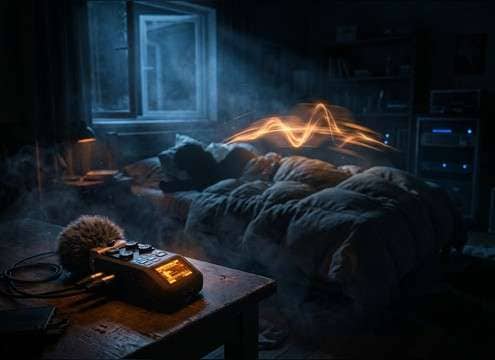

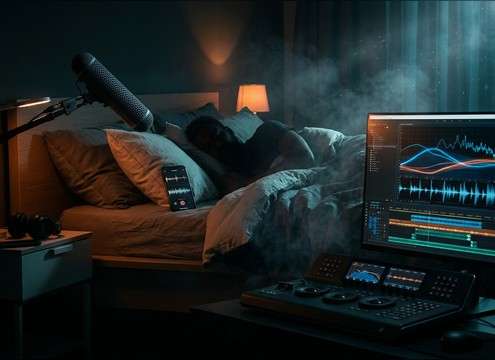


Heavy snoring can easily overpower dialogue or feel fake if the rhythm and room do not match the scene. Use these checks to pick the right clip from the library, or write a prompt that targets the exact texture, distance, and cadence you need for comedy, realism, or tension.
Start with intensity and texture
Decide whether you need a chesty low-end rumble, a nasal rasp, or a gritty throat rattle. That choice affects how the snore reads on small speakers and how much it masks voice.
- For realism, ask for controlled loudness and natural breath transitions
- For comedy, request a punchy transient or a single snort burst
- If dialogue is present, favor smoother mids and a shorter tail
Match perspective and room tone
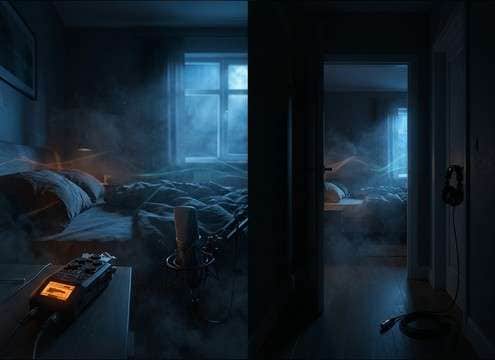
Snoring that is too close for a wide shot feels disconnected. Pick a close-mic take for bedside framing, or a distant version with reflections for hallway or doorway angles.
- Close: more detail, stronger low-end, less room tail
- Distant: narrower stereo, more reflections, softer transients
- Muffled: reduced highs, rounded attack, sits behind other beds
Choose timing that edits easily
Snoring cadence is the first thing editors notice when looping or cutting between angles. Use shorter clips for punchlines and longer clips for continuous sleep coverage.
- 5 seconds: stingers, quick cutaways, reaction beats
- 10 seconds: one or two full snore cycles for continuity
- 20 seconds: loopable bed under long scenes with stable noise floor
Avoid the usual giveaways
Overly perfect repetition, sudden level jumps, or harsh digital fizz will expose the effect immediately. Pick clips with smooth starts and ends, and regenerate if artifacts appear.
- Avoid clipping or breath pops that spike above the mix
- Avoid cartoonish pitch swings unless the scene is intentionally stylized
- Avoid excessive hiss; a small amount of room tone is fine, but it should be stable