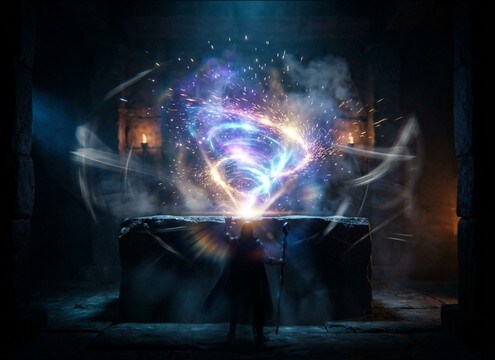
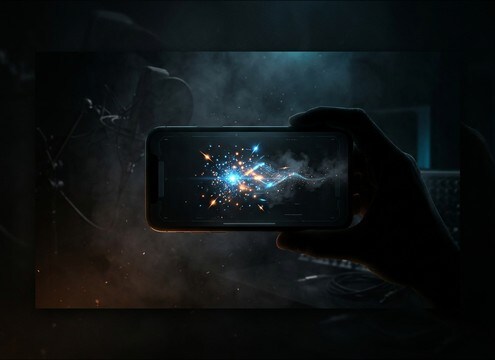
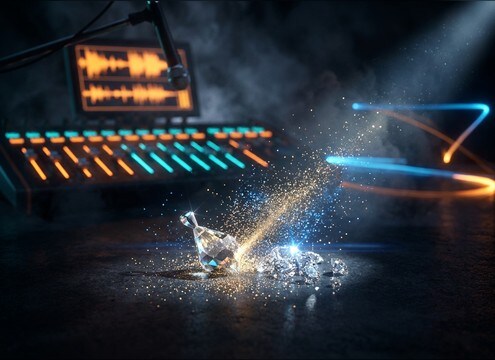

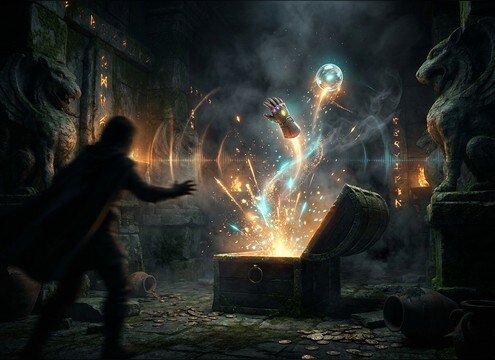


Sparkles can read as magical, cute, luxury, or UI-clean depending on how sharp the transient is, how long the tail rings out, and how wide the stereo shimmer feels. Use the library previews when you just need a quick accent, or write a prompt that specifies the exact motion on screen (burst, sprinkle, sweep, or trail) so the generated take lands precisely on your edit.
Pick the sparkle type that matches the visual motion
Start by naming the action your audience sees. A burst fits a pop-in, a sprinkle fits falling particles, and a sweep fits a transition or logo animation.
- Burst: one strong hit with clustered twinkles right after
- Sprinkle: many small twinkles with staggered timing and less punch
- Trail: repeating twinkles with a smooth fade for moving particles
Specify attack, brightness, and tail length
Sparkles can get harsh or disappear under music. Ask for a crisp transient when you need clarity, or a softer attack when it should feel gentle and cute.
- For clarity: request a crisp transient and controlled high end
- For softness: request rounded transients and lower intensity shimmer
- For timing: request a short tail for UI, longer decay for reveals
Control stereo width and space for the scene
A wide shimmer feels cinematic, while a narrow sparkle feels close and focused. If your scene has room audio, keep reverb subtle so the sparkle does not sound pasted on.
- Wide stereo for logo stings, title cards, and big reveals
- Narrow stereo for phone UI, notifications, and compact overlays
- Low room tone for clean edits; light reverb only when needed
Avoid common sparkle problems in edits
The wrong sparkle is usually too bright, too long, or too busy. Fix it by prompting for restraint and by selecting a version with less masking and cleaner decay.
- Avoid piercing highs: request softer brightness or less glassy tone
- Avoid tail buildup: choose a quicker decay when triggers repeat
- Avoid clutter: reduce particle density so dialogue stays clear