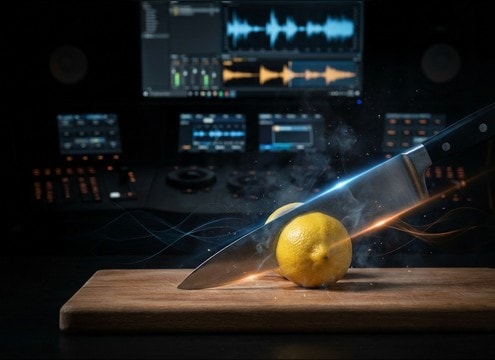






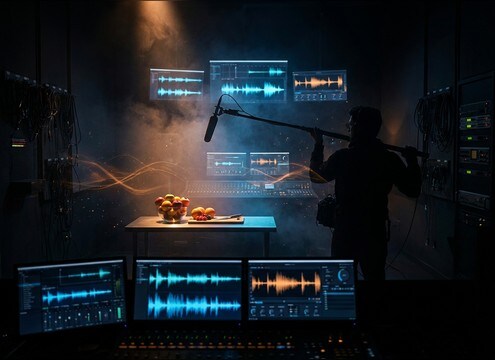


Fruit foley is all about texture: crisp cell structure, wet pulp, and the small handling noises that sell the close-up. Use the library when you need a fast, mix-ready bite or splat, then switch to AI prompts when you need a different fruit, a tighter transient, or less room tone to fit your cut.
Call out the fruit texture
Different fruits read instantly by their texture. Apples and pears want sharp, dry crackle; berries want soft compression; citrus wants papery peel and light zest noise. Naming the texture helps the generator avoid generic chewing.
- Use words like crisp, brittle, fibrous, pulpy, or syrupy
- Mention seed clicks or peel crackle if it matters on camera
- Ask for clean transients if you need the bite to cut through
Define the action and timing
A bite, a slice, and a splat have different envelopes. If the edit is tight, describe whether you need one decisive hit, a short sequence, or repeated small impacts, and keep the tail appropriate for the scene.
- Specify one bite vs continuous chewing vs rapid chopping
- Request short decay for fast cuts, longer wet tail for slapstick
- Add notes like no extra clatter if props are not visible
Choose space, distance, and stereo
Fruit sounds can be intimate and dry or slightly roomy like a real kitchen. Tell the prompt how close the mic feels and whether you want a narrow center image or wider stereo for impact moments.
- Close-mic dry for ASMR and macro food shots
- Light room reflection for home kitchen realism
- Controlled stereo width so it does not fight music or VO
Avoid the most common fruit SFX mistakes
Bad fruit foley often sounds like random wet noise or overly loud chewing. Keep it believable by controlling noise, preventing distortion, and avoiding loops that repeat the same transient pattern.
- Ask for no voice, no breathing, and no background hum
- Request no clipping and moderate low-end on splats
- If it must loop, ask for consistent bed texture with no obvious repeats