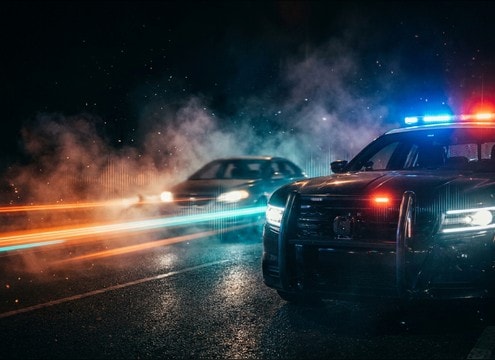


Police audio reads as believable when you pick the right siren pattern, keep radio elements non-distracting, and match perspective to camera distance. Use the library for quick placeholders, then refine with prompts like wail vs yelp, close passby vs muffled indoor, or clean console beeps vs gritty handheld static.
Pick the siren pattern that matches action
Different patterns communicate different urgency on screen. Wail feels sustained and authoritative, yelp cuts through fast edits, and hi-lo often signals controlled traffic movement. When prompting, specify cadence, brightness, and whether you want a steady cycle or a short hit.
- Use wail for approach shots and establishing emergency presence
- Use yelp for quick escalation, turns, and rapid cut sequences
- Use hi-lo when you want a rhythmic, less chaotic warning
Make radio cues feel real without stealing focus
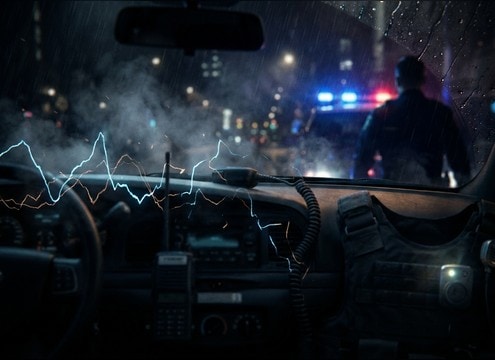
Radio squelch, beeps, and light static can sell authenticity, but intelligible speech can clash with dialogue or raise content issues. Prompt for non-verbal radio events and control texture so it sits in the midrange without harsh hiss.
- Ask for squelch open and close, no intelligible speech
- Request clean beeps for dispatch consoles and UI-like moments
- Reduce masking by keeping static short and avoiding heavy low-end
Match perspective: close, passby, or distant through walls
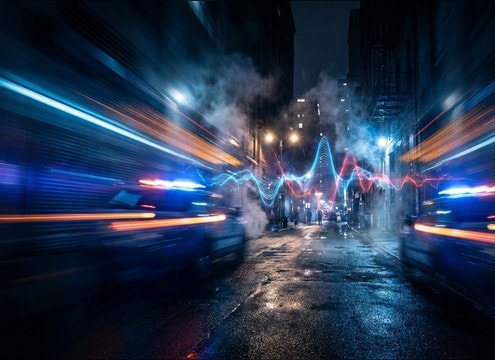
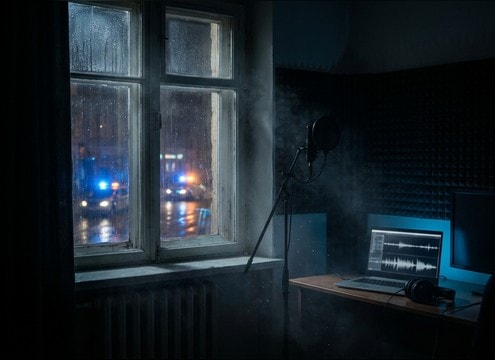
A close siren needs crisp transients and presence, while distance usually softens highs and adds environmental smear. For movement, request doppler and stereo travel. For interiors, ask for muffling and a touch of room tone so it feels like it is outside the building.
- Close: brighter tone, clearer attack, minimal ambience
- Passby: doppler shift, stereo movement, trailing street tail
- Distant/indoor: muffled highs, softer attack, subtle room tone
Avoid common police SFX pitfalls
Overly distorted sirens, exaggerated reverb, or constant loud radio noise can make a scene feel fake and fatiguing. Keep tails controlled, avoid nonstop high-frequency energy, and choose durations that match the cut rather than forcing long loops.
- Skip extreme distortion unless the story calls for damaged audio
- Avoid long, washy tails that blur dialogue and location clarity
- Choose 5s for hits, 10s for motion, and 20s for ambience beds