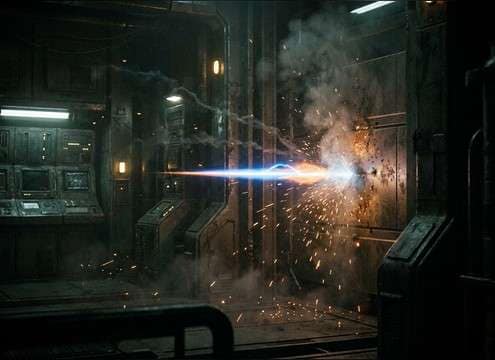
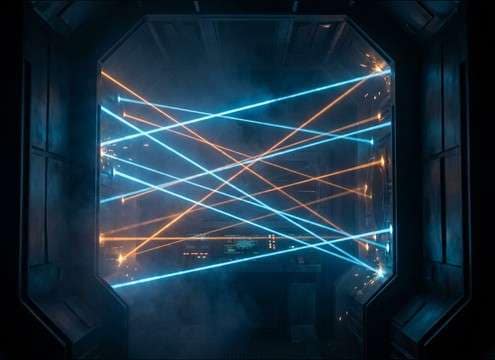
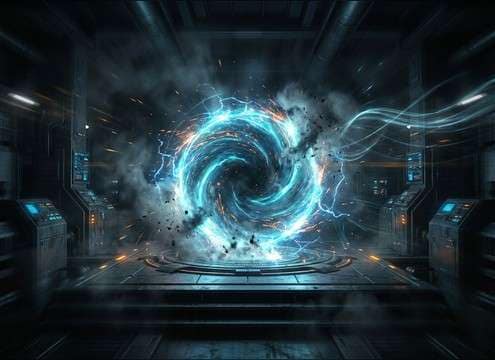
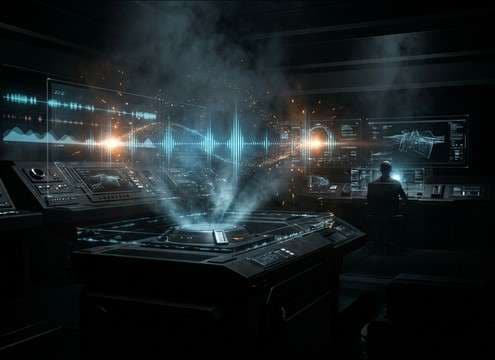
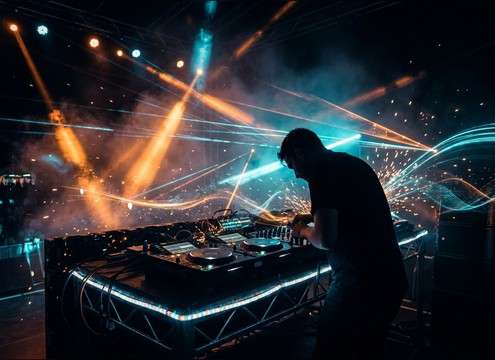
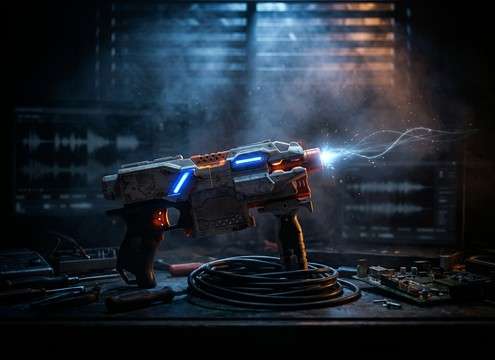


Laser-light sounds can read as sharp energy, smooth illumination, or rhythmic scanning depending on transient shape, pitch motion, and tail behavior. Use this guide to choose the right library clip or write a prompt that targets the exact on-screen action, then regenerate variations until the zap, sweep, or beam sits in your mix without harsh hiss or cluttered decay.
Start with the action type
Describe what the light is doing on screen. A single blaster hit needs a fast attack and a clean stop, while a beam sweep wants a longer ramp and audible pitch movement. Scans and grids usually need repeated pulses with steady timing.
- Use words like zap, snap, click pulse, sustained beam, sweep, scan ticks
- Call out timing: single hit, triple burst, or repeating pulses
- Specify stop behavior: hard stop, short fade, or gentle decay
Shape pitch and brightness for readability
Most laser-light cues live in the mid and high range. If your scene already has cymbals, sibilant dialog, or UI noise, ask for a slightly darker tone or smoother top end. If the cut feels dull, request a brighter transient and a tighter tail.
- Ask for pitch glide up or down for sweeps and transitions
- Use bright, glassy, neon, or warm to steer the harmonic color
- Mention controlled hiss or clean noise floor to avoid fizz
Match space with tail and stereo width
Laser-light SFX can feel close and direct or placed in a room. If the shot happens in a corridor or lab, a touch of early reflections helps. For HUD and UI, keep it tight and mostly mono so it feels attached to the interface.
- Request small room reflections or dry and close for UI
- Set stereo width: narrow for focus, wide for spectacle
- Control tail length: short decay for fast cuts, longer for reveals
Avoid common laser mistakes
The fastest way to ruin a sci-fi cue is adding a boomy low-end, overlong reverb, or harsh digital hiss that masks dialog. Keep the effect purposeful: a laser-light sound should feel like energy and light, not an explosion unless your scene shows impact debris.
- Avoid heavy rumble unless there is a large weapon or impact
- Avoid long wash reverb that smears fast edits
- Avoid clipped distortion that creates brittle, fatiguing highs