



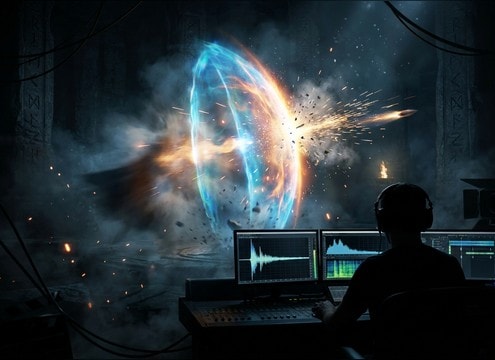





Magic sounds get chosen by function first (cast, hit, reveal, ambience), then by texture (sparkly, smoky, gritty, crystalline) and space (close and dry vs distant and roomy). Use the prompts on this page as starting points, and specify timing words like snap, swell, bloom, and decay so the sound reads clearly in a cut.
Pick the spell action, not the genre
Instead of asking for generic magic, describe what the viewer sees and when it happens. A wand swish, a rune reveal, and a portal open need different envelopes and transient shapes.
- Use action verbs: swish, snap, burst, shimmer, charge, release
- Call out the envelope: sharp transient, soft attack, long decay tail
- Name the moment: cast, impact, confirm, reveal, summon
Control brightness, pitch, and texture
Magic SFX often compete with dialogue and music. Prompt for the frequency focus you need: bright sparkles that sit above speech, or mid-focused whispers that feel ominous without booming low end.
- Bright and crystalline for sparkles and UI confirms
- Dark and breathy for curses, stealth charms, and whispers
- Gritty or stone-textured for runes, relics, and ancient magic
Match distance and space to the shot
A close-up hand cast usually wants a dry, tight sound, while a portal in a hall can carry a longer tail and audible room reflections. If your sound feels too big, reduce space in the prompt.
- Close and dry: minimal room tone, quick cutoff
- Medium space: subtle reflections and controlled tail length
- Large space: wider stereo and longer decay for portals
Avoid common magic SFX pitfalls
Overly long tails and noisy shimmer can wash out a scene. Keep stingers short, avoid harsh high-end fizz, and make sure ambience beds are loop-friendly if you need them under dialogue.
- Do not let the tail run past the cut point unless it is intentional
- Avoid brittle high-frequency fizz that masks sibilance in speech
- For ambience, request steady texture and consistent noise floor