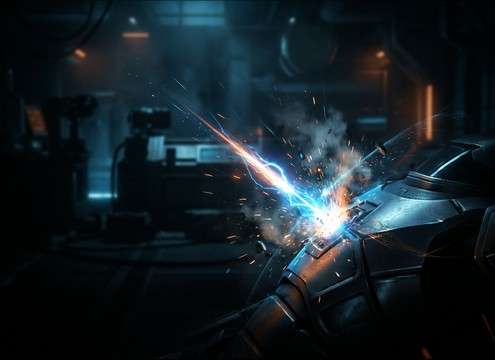
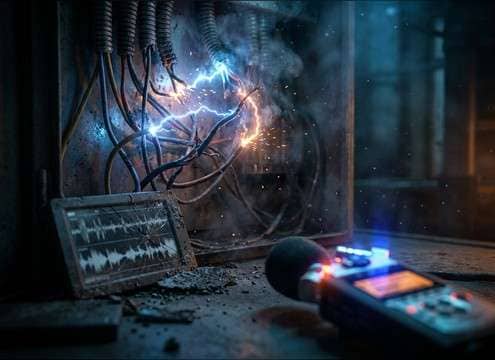
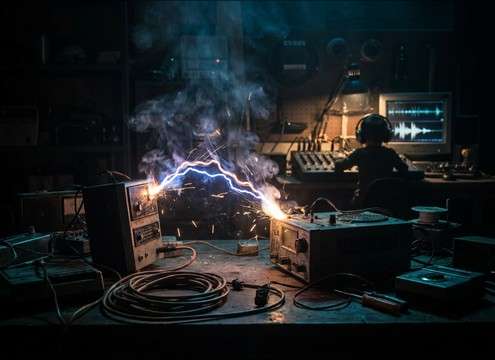





Zaps can read as lasers, electricity, UI feedback, or comedy depending on transient shape, pitch motion, and tail texture. Use the library to find a close match, then prompt for controlled changes like sharper attack, reduced hiss, wider stereo, or a longer crackle sustain. The goal is to hit the exact frame while keeping the high end listenable.
Pick the action: hit, burst, or sustain
Start by matching the on-screen motion. A single-frame impact wants a tight snap. A weapon shot wants a zing plus a tiny tail. A damaged cable wants a continuous crackle that stays consistent until it ends.
- For quick cuts, prompt: sharp transient, short decay, no pre-roll
- For charged shots, prompt: fast attack plus a brief fizz tail
- For arcing power, prompt: sustained crackle texture with a tapering end
Shape pitch and tone to fit the world
Pitch direction and harmonic content sell the category. Lasers often feel cleaner with a focused tone. Electricity can be noisier with sizzling highs. Comic zaps lean into obvious pitch bends.
- Laser: bright, smooth, narrowband zing, minimal noise
- Electric: gritty crackle, sizzling top, irregular micro pops
- Comedy: exaggerated pitch sweep and a playful short ring-out
Control tail, space, and stereo width
Tail length decides how much the zap smears into the next beat. Space decides whether it feels close or off-screen. Stereo width helps big moments feel larger, but can fight center dialogue if overdone.
- Close-up hit: dry, minimal room tone, tight tail
- Off-screen or hallway: subtle reflections and softer transient
- Big power moment: wider stereo bloom, then controlled decay
Avoid the common zap mistakes
The fastest way to ruin a zap is making it painfully bright or too long for the edit. If it masks speech or music, regenerate with less hiss, less top end, or a shorter tail rather than pushing heavy EQ.
- If it sounds piercing, prompt: smoother highs, less hiss, less distortion
- If timing feels late, prompt: faster attack, no fade-in, tighter start
- If it muddies the mix, prompt: shorter decay and less noise bed