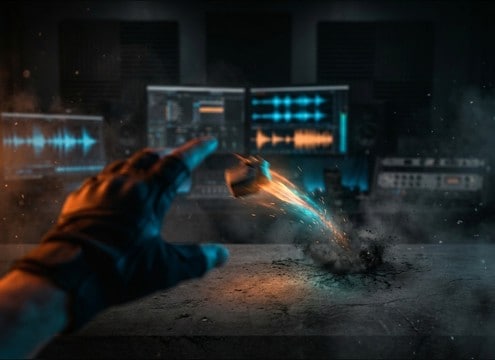
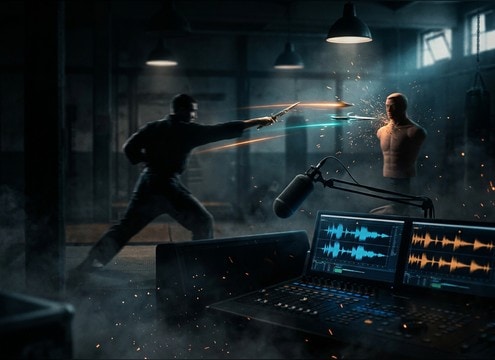
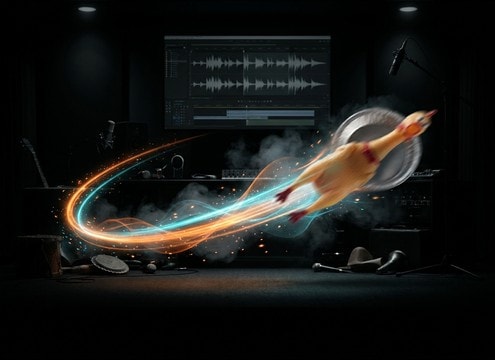

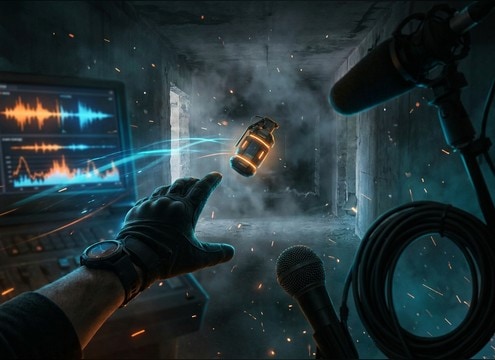
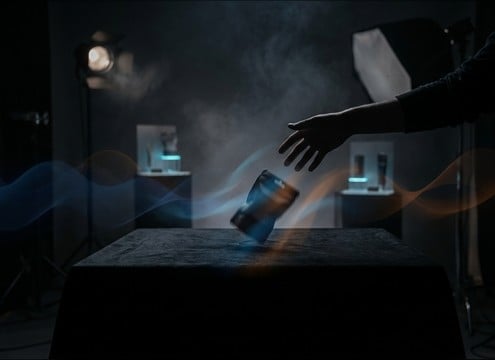


Throw audio is all about timing: a short release transient, a flight whoosh that matches speed, and an impact that fits the surface. Use prompts that name the object, the camera distance, and whether you need only pass-by air or a clear landing hit. The goal is to get a clip that syncs to the frame without masking dialogue or footsteps.
Start with the object and weight
The same throw motion sounds different depending on mass and material. Heavier objects add low-mid push and thicker air movement, while lighter objects read as a thin hiss with less low end.
- Name the object: rock, bottle, knife, backpack, ball
- Add weight cues: light, heavy, bulky, hollow
- Choose material texture: metal, glass, plastic, wood
Specify speed, arc, and timing
Flight sound is driven by speed and proximity. A fast pass-by wants a sharper attack and shorter tail, while a lobbed arc benefits from a longer, softer whoosh that peaks mid-clip.
- Use verbs: whip, lob, toss, fling, overhand throw
- Call out motion: quick pass-by, slow arc, spinning
- Ask for timing: whoosh starts immediately, impact near the end
Set perspective and environment
Distance and space determine brightness and decay. Indoor throws pick up early reflections, while outdoor throws feel wider with less reflective slap and more air.
- Distance: close mic, mid distance, far away
- Space: small room, hallway, warehouse, open field
- Tail detail: short decay, long decay, dry, with room tone
Avoid common throw SFX mismatches
Most bad throw cues fail because the whoosh is too long, the impact is too loud, or the perspective does not match the camera. Tighten the prompt so the clip stays believable and editable.
- Avoid overly long swooshes for quick on-screen throws
- Do not let impact overwhelm dialogue; request a softer hit if needed
- Prevent clutter by asking for a single impact instead of multiple bounces