


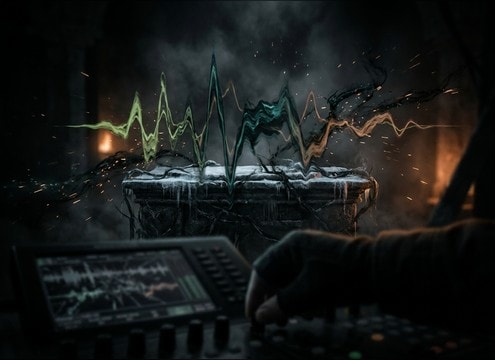
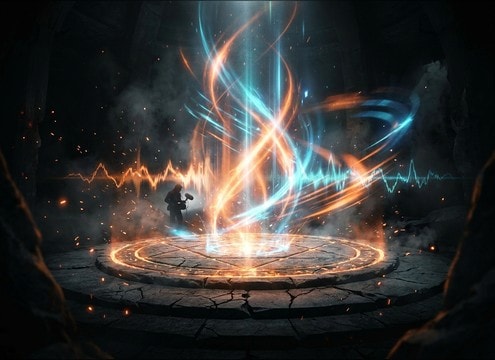


Spell audio usually fails for two reasons: the attack does not line up with the casting motion, or the tail is the wrong length for the camera cut. Use the library for instant placeholders, then prompt-generate variants by specifying spell element, intensity, distance, and the exact moment (cast, launch, impact, or sustain). The goal is a clear transient for readability plus a tail that supports the scene without masking dialogue or UI.
Start with the action: cast, launch, hit, or aura
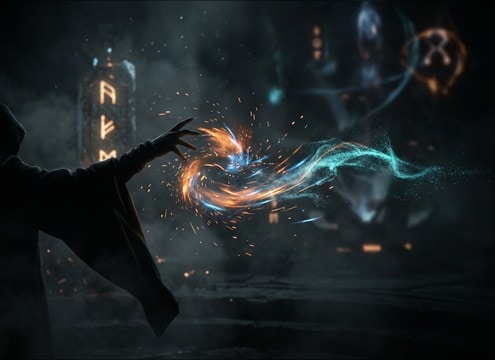
Write prompts around what the viewer sees. A hand flick wants a short whoosh and sparkle, a projectile needs a directional burst, and a hit needs a tight transient with a controlled decay. If you need an aura, ask for a stable bed with subtle motion instead of repeated impacts.
- Cast: quick swell, bright transient, short shimmer tail
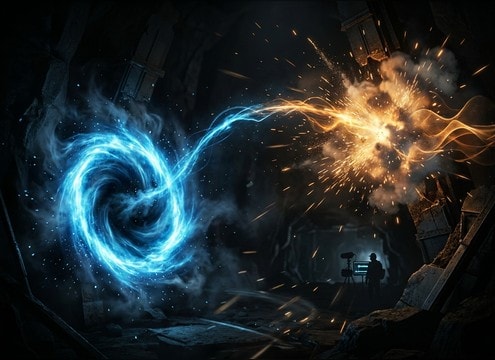
- Launch: focused whoosh plus a thin energy streak texture
- Hit: sharp snap or pop, minimal room tone, fast cutoff
Specify element and texture, not just "magic"
Element cues help listeners identify the spell instantly. Fire reads as hiss and crackle, ice reads as glassy snaps, lightning reads as fast cracks, and holy/heal reads as smooth chimes. Add texture adjectives like gritty, glassy, airy, or warm so the generator does not drift into generic sci-fi blips.
- Fire: hot hiss, ember crackle, short smoky tail
- Ice: brittle snap, crystalline tinkles, cold airy decay
- Lightning: bright crack transients, rapid zaps, controlled tail
Control distance, space, and stereo width
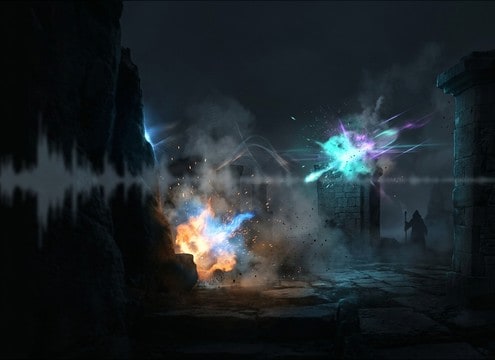
A close-up spell should feel dry and present with a strong transient, while a wide shot benefits from more reflections and wider stereo. Ask for room size and perspective so your spell does not sound like it is happening inside the listener's head when the camera is far away.
- Close: dry, centered, strong attack, short decay
- Mid: light reflections, moderate tail, slightly wider stereo
- Distant: softer transient, more room tone, longer decay
Match the cut with tail length and fade shape
If your edit changes shots quickly, pick shorter decays or ask for a clean stop. For ritual scenes, longer tails and a gentle fade help sell scale. When stacking multiple spells, keep each one lighter in low-end to avoid mud and leave space for impacts and footsteps.
- Fast edits: tight tail, clean end, minimal sustain
- Ritual build: rising bed, smooth decay, stable low rumble
- Stacking: reduce low-end, avoid constant noise, keep transients distinct