


Wake-up alarms fail when they are too harsh, too long, or too roomy for the shot. Use prompts that specify device type, rhythm, and how the sound ends. Then pick a clip whose transient reads instantly, whose tail does not smear into dialogue, and whose tone matches the character and setting, from a calm sunrise cue to a panic-inducing oversleep alarm.
Decide the alarm source first
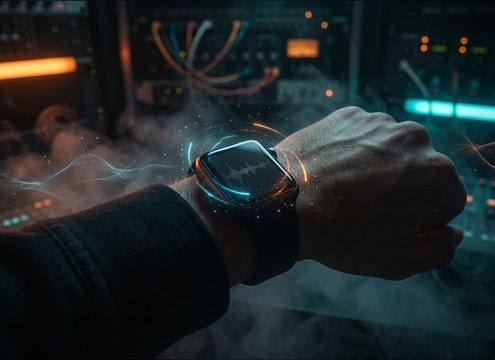
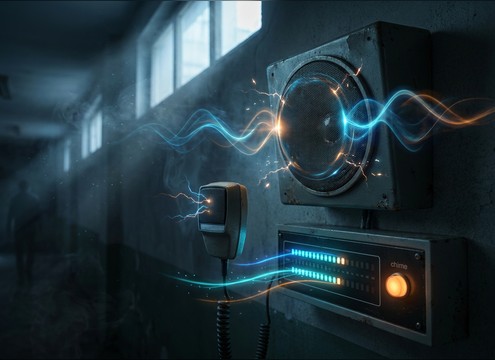
A phone alarm reads different from a clock radio or a mechanical bell. Naming the source helps the generator pick the right texture, frequency focus, and attack shape.
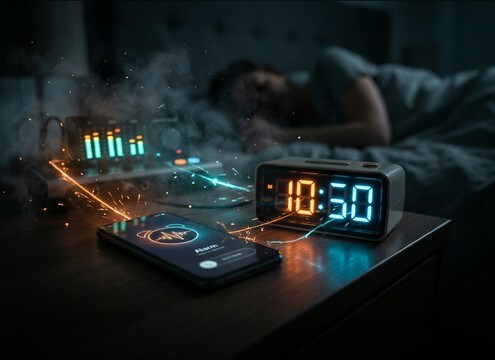
- Phone alarm: clean beeps, tight transients, minimal reflections
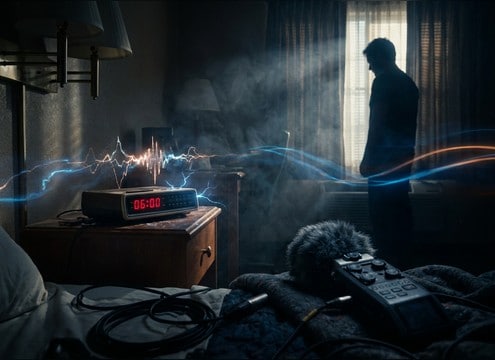
- Clock radio: midrange buzz, slight static, modest room tone
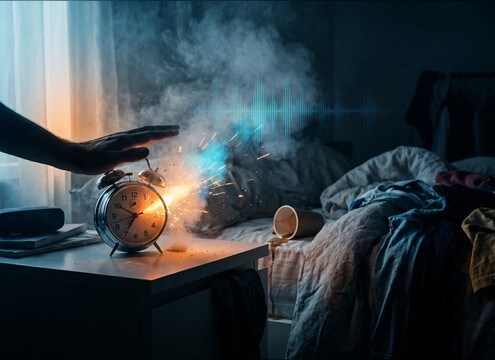
- Mechanical clock: metallic ring, gritty texture, short clang tail
Match rhythm to the edit
For comedy or urgency, repetition matters more than realism. For gentle wake-ups, use fewer hits and smoother fades. Keep timing predictable so it cuts cleanly with snooze actions.
- Single cue: one chime with a controlled decay for quick cuts
- Pulse pattern: evenly spaced beeps that loop without drift
- Two-stage: soft lead-in then louder hits for escalation
Control attack, tail, and stereo width
The first 100 ms decides whether the alarm reads on a phone speaker. The tail decides whether it fights the next line of dialogue. Stereo width decides whether it feels like UI or a room prop.
- Ask for fast attack when the alarm must punch through ambience
- Ask for short tail if speech starts immediately after the alarm
- Ask for narrow stereo for UI, wider stereo for bedroom ambience
Avoid common wake-up SFX mistakes
Many stock alarms are too abrasive, clip easily, or include extra noise that sounds fake. A clean, controlled alarm is easier to mix and less distracting.
- Avoid constant hiss unless you specifically want radio static
- Avoid overly long ring tails that blur the next cut
- Avoid extreme high-end that becomes painful on earbuds