


Rabbit audio is all about small transients and believable spacing. If your scene shows quick movement, prioritize short attack clicks and minimal tails. For feeding or calm moments, choose longer chew textures with low noise and gentle room tone. When generating, describe the action, surface, distance, and whether you want a single cue or a loopable bed.
Match behavior to the story beat
Different rabbit actions read differently on camera. A warning thump is a single, low impact cue, while calm nibbling is repetitive and softer. Write prompts that describe intent so the rhythm feels natural.
- Use words like single, sudden, or isolated for a thump cue
- For feeding, request steady rhythm and natural pauses
- For cute reactions, ask for small, quiet squeaks with short decay
Specify the surface and props
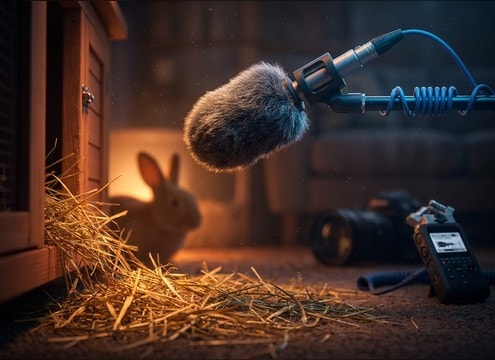
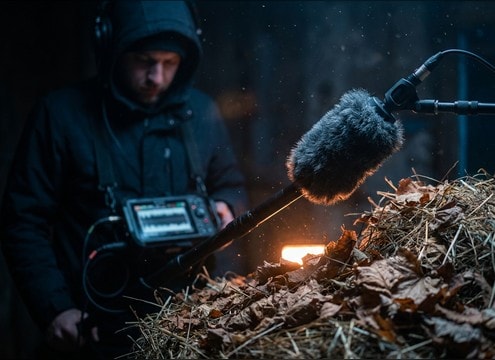
Hops change dramatically by surface. Wood gives sharper clicks, grass softens the transient, and hay adds a papery rustle layer. Include the contact surface so the texture fits the picture.
- Wood or tile for crisp hop ticks and clearer attack
- Dry grass for softer impacts and a light brushed texture
- Hay or bedding for muffled movement with gentle high-frequency rustle
Control distance and space
Rabbit sounds can feel fake if the room does not match the shot. Decide whether you need close detail (sniffs, mouth clicks) or a more distant perspective with subtle reflections or outdoor air.
- Close-mic: minimal reverb tail and very low room tone
- Indoor mid-distance: short reflections and a small bloom after impacts
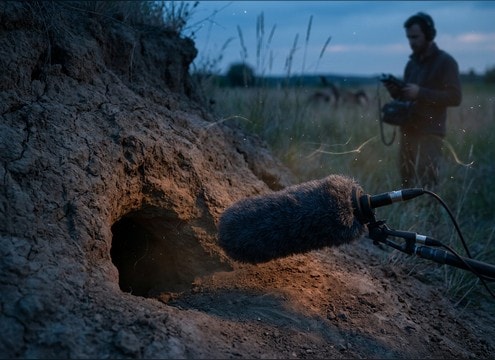
- Outdoor: thin air bed, less room reflection, slightly wider stereo
Avoid common giveaway artifacts
Because these are small sounds, unwanted resonance or overly bright transients can stand out. If a result feels wrong, revise the prompt toward cleaner, drier, and less exaggerated motion noise.
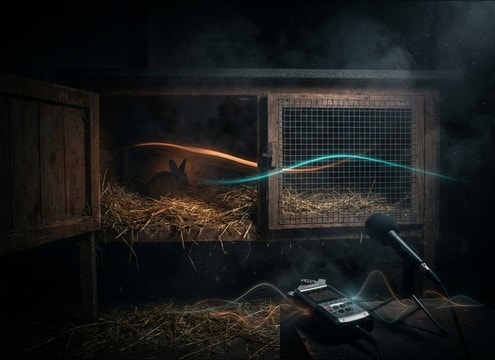
- Avoid harsh metallic ringing unless the shot shows a wire cage
- Do not overuse loud squeaks for calm scenes; keep them subtle
- If the tail feels too long, prompt for dry, short decay, minimal reflections