

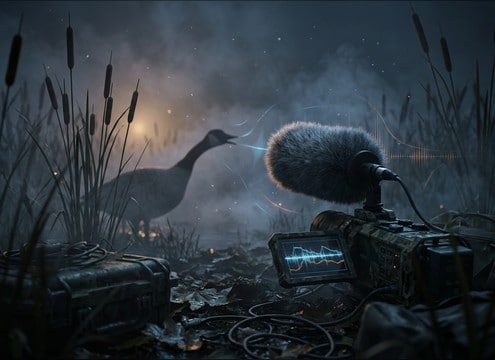




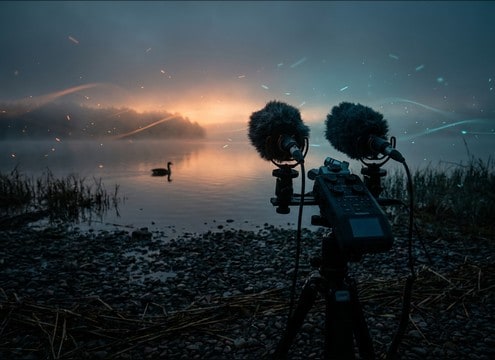


Goose audio sells a scene when the behavior and perspective match the shot. Use the library for instant picks, then refine with AI prompts: tighten the honk attack for a reaction beat, lengthen the decay for open outdoor space, or generate a calmer flock bed that sits under dialogue without harsh peaks.
Match the behavior first
A honk reads like a call or complaint, while a hiss reads like a warning. Wing flaps and body rustle help when the goose is moving on camera.
- For comedic buttons: ask for a single honk with a tight tail
- For threat beats: prompt an aggressive hiss with gritty noise texture
- For motion: add wing flaps or footsteps so the sound has physical action
Set perspective with distance cues
Perspective is mostly transient sharpness and how much air or room tone you hear. Close sounds are crisp and dry; distant sounds are softer with more space.
- Close: request strong transient, minimal ambience, narrow stereo
- Mid: ask for light outdoor reflections and moderate decay
- Distant: prompt softened high end, more air, and a smoother tail
Keep the cut clean and editable
Goose calls can spike quickly. Choose versions with controlled peaks and stable backgrounds so they sit under narration or music without pumping.
- Ask for clean background or minimal room tone if you will add ambience later
- For loops, request stable noise floor and smooth transitions
- If the call is too harsh, prompt softer transients and shorter decay
Avoid common goose SFX mistakes
The wrong goose can feel like a duck, or the ambience can get too busy. Use prompts to reduce clutter and keep the signature honk recognizable.
- Avoid overly wet reverb for outdoor parks unless the location is enclosed
- Avoid nonstop honking beds when the visuals show calm, idle birds
- Avoid excessive low-end rumble that competes with footsteps and dialogue